

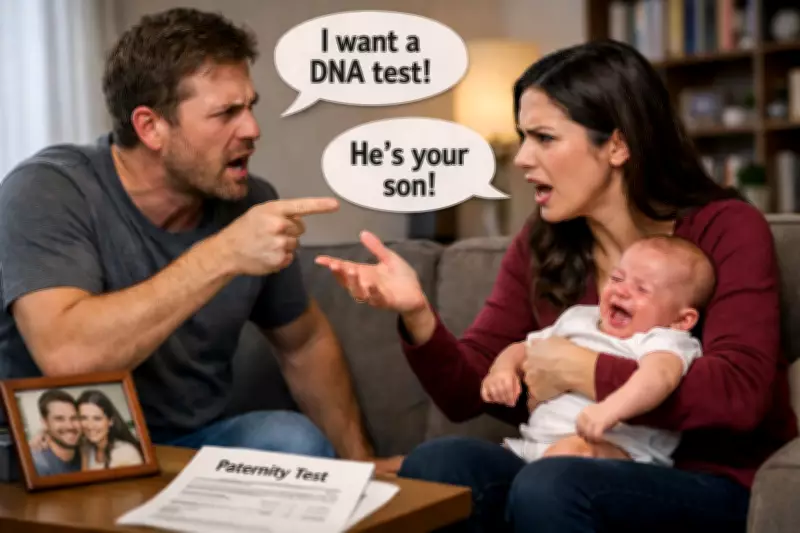
Legal Framework for DNA Testing in Cases of Suspected Infidelity
In India, the question of whether a husband can legally request a DNA test of his children to prove his wife's infidelity is a complex issue that intersects family law, privacy rights, and ethical considerations. This legal analysis delves into the current judicial stance and statutory provisions governing such requests.
Court Precedents and Judicial Interpretations
Indian courts have addressed this matter in various cases, balancing the husband's right to know the paternity of his children against the wife's and children's rights to privacy and dignity. In landmark rulings, courts have emphasized that DNA testing should not be ordered lightly, as it can have profound emotional and social consequences for all parties involved.
For instance, the Supreme Court of India has held that a DNA test can be directed only when there is a strong prima facie case of infidelity, supported by substantial evidence. The court must consider the best interests of the child, as enshrined in the principle of "parens patriae," which prioritizes the child's welfare over parental disputes.

Legal Grounds and Procedural Requirements
Under Indian law, a husband seeking a DNA test typically files a petition in family court or civil court, alleging adultery under Section 497 of the Indian Penal Code (though this section was decriminalized in 2018, it remains relevant for civil matters like divorce). The key legal grounds include:
- Proof of Adultery: The husband must provide credible evidence, such as witness testimonies or circumstantial proof, to suggest infidelity before a DNA test is considered.
- Child's Best Interests: Courts assess whether the test is necessary for the child's well-being, such as in inheritance or custody disputes, rather than solely to prove infidelity.
- Consent and Privacy: In many cases, the wife's consent is required, and courts may refuse the test if it infringes on the privacy rights of the mother and child under Article 21 of the Constitution.
Ethical and Social Implications
Beyond legalities, DNA testing in infidelity cases raises significant ethical questions. It can lead to family discord, stigmatization of the child, and psychological trauma. Experts argue that such tests should be a last resort, with mediation and counseling preferred to resolve marital disputes amicably.
Moreover, the decriminalization of adultery in 2018 has shifted the focus from criminal penalties to civil remedies, making DNA tests more relevant in divorce proceedings for establishing grounds like cruelty or desertion, rather than as a tool for public shaming.
Recent Developments and Future Outlook
Recent court judgments have shown a trend toward stricter scrutiny of DNA test requests. For example, in some cases, courts have denied tests when the husband's motive appeared vindictive or when the child's age made the process invasive. Legal reforms are also being debated to provide clearer guidelines on paternity testing, balancing technological advances with human rights protections.
In conclusion, while a husband can seek a DNA test to prove his wife's infidelity in India, it is not an automatic right. The process is governed by judicial discretion, with courts weighing evidence, privacy concerns, and the child's welfare. As family dynamics evolve, this area of law continues to adapt, reflecting broader societal values around trust, responsibility, and justice.






