CBI Team Conducts Detailed Inspection at Patna Hostel in Medical Student Death Probe
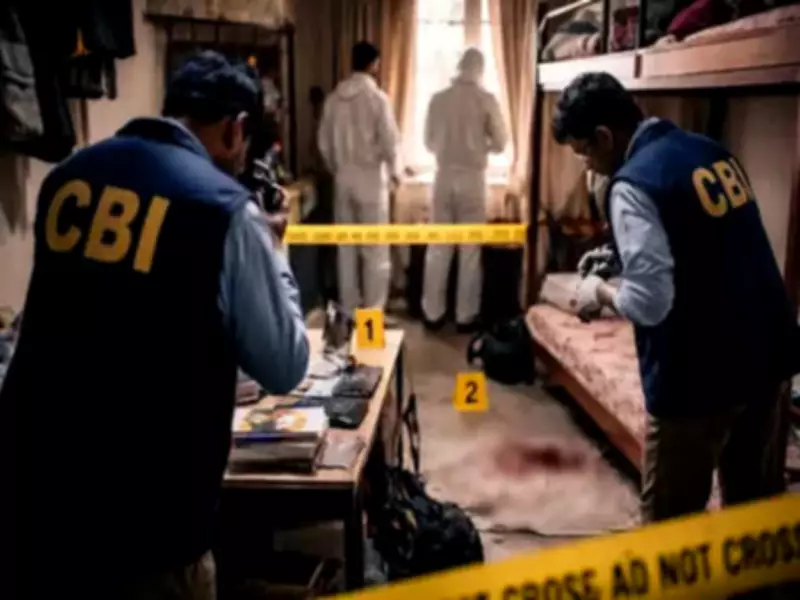
A team from the Central Bureau of Investigation (CBI) visited the Shambhu Girls’ Hostel in Patna on Saturday as part of the ongoing investigation into the death of a medical aspirant. The inspection was carried out in connection with the case that has drawn significant attention.
Comprehensive Examination of Hostel Premises
The CBI team, accompanied by members of the Special Investigation Team (SIT) and Sachivalay SDPO-1 Annu, conducted a thorough inspection of the hostel. Their focus included a detailed examination of the student’s room, the exit and entry gates, and critical CCTV footage from the premises.
The investigators are meticulously reconstructing the sequence of events leading up to the incident. This involves analyzing how the student arrived at the hostel, her movements within the facility, and her interactions with others present at the time.

Based on the available CCTV footage, the CBI team received a comprehensive briefing from the SIT. The agency is specifically examining several key aspects:
- The exact time of the student’s arrival at the hostel.
- The auto-rickshaw in which she reached the location.
- The moment she entered the hostel premises.
- The point at which her health deteriorated.
- When she was taken out of the hostel.
- The initial location where she was first taken for medical assistance.
Crime Scene Analysis in Densely Populated Area
According to police sources, the CBI team is examining the hostel location from a strict crime scene perspective. The hostel is situated in a densely populated area of Patna, which presents unique challenges for the investigation.
The rear of the hostel building is adjacent to residential houses, while the front faces shops followed by a link road. There is considerable movement of people in the vicinity, which could both complicate and aid the investigation depending on witness availability and evidence preservation.
Timeline of CBI Involvement in the Case
The Bihar government formally recommended a CBI investigation into the case on January 31. After a twelve-day period following the recommendation, the Centre granted approval for the probe to proceed.
Subsequently, on February 12, the CBI officially registered the case in Patna. The responsibility for leading the investigation was handed over to CBI Assistant Superintendent of Police Pawan Kumar Srivastava, who now oversees all aspects of the probe.
Significant Challenges Facing the Investigation
The most substantial challenge for the CBI investigation is the delay in taking over the case. Several weeks have passed since the incident occurred, creating multiple obstacles:
- Digital data, including potential CCTV recordings, may have been overwritten or lost due to the passage of time.
- Witness statements may contain inconsistencies as memories fade or are influenced by external factors.
- The freshness and integrity of physical evidence may have diminished, making forensic analysis more complex.
The CBI will now need to build the case through careful reconstruction of events, which is always a difficult process in delayed investigations. The agency must also address potential initial mistakes made by the SIT during their preliminary investigation.
Legal and Technical Hurdles in the Probe
The defense in any future legal proceedings may use alleged flaws in crime scene management, evidence sampling, and timeline establishment as grounds in court. The CBI will need to demonstrate that their new investigation is both impartial and scientifically rigorous to ensure that earlier investigative theories do not weaken the case.
Furthermore, the family of the deceased and some witnesses have already spoken about experiencing pressure and fear. It will be crucial for the CBI to implement robust witness protection measures and work to restore the family’s confidence in the investigative process. Without establishing trust, witnesses may be reluctant to provide open and honest statements, creating both social and psychological challenges beyond mere legal considerations.

Scientific Correlation of Evidence
The CBI faces the technical challenge of scientifically correlating multiple pieces of evidence, including post-mortem findings, Forensic Science Laboratory (FSL) reports, and opinions from medical experts at AIIMS. Even a minor error in medical opinion could provide the defense with reasonable doubt, making this one of the most sensitive aspects of the investigation.
Additionally, digital evidence requires precise synchronization:
- CCTV footage timestamps must align with other evidence.
- Call detail records need accurate correlation with events.
- Tower dump data and mobile device information must be carefully analyzed.
If even one dataset fails to match the established timeline, the entire digital theory supporting the investigation could be significantly weakened. The CBI’s approach to these technical challenges will be critical to building a strong, evidence-based case.