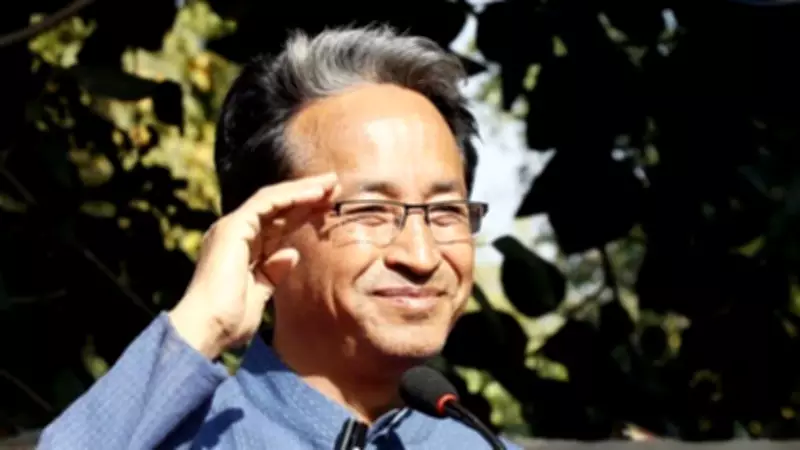
Centre Informs Supreme Court: No Release for Sonam Wangchuk on Health Grounds
The Centre has firmly stated to the Supreme Court that Ladakh activist Sonam Wangchuk, who is currently detained under the National Security Act-1980, cannot be released based on medical grounds. This declaration came during a hearing on Wednesday, where Solicitor General Tushar Mehta emphasized that Wangchuk's health condition does not warrant any such action.
Health Assessment and Court Proceedings
In response to the court's inquiry on February 4 regarding a potential reconsideration of Wangchuk's detention due to his health, Mehta provided a detailed update. He revealed that Wangchuk's health has been examined 24 times, and he is described as "fit, hale, and hearty." While Wangchuk has experienced some digestive issues, he is receiving appropriate treatment, and there is nothing alarming about his condition. The bench, comprising Justices Aravind Kumar and P B Varale, is hearing a plea filed by Wangchuk's wife, Gitanjali Angmo, challenging his detention order issued on September 29, 2025.
Judicial Concerns and Government Stance
Justice P B Varale had previously urged the Centre to reflect on the detention, noting that Wangchuk's health is "not that good" and considering age-related factors. However, Mehta countered this by asserting that exceptions cannot be made, as the grounds for the detention order remain valid. He stressed that releasing Wangchuk on health grounds would not be possible or desirable, despite the court's suggestions. The government has given utmost consideration to the matter but maintains its position based on national security concerns.

Allegations and Interpretations
During the hearing, arguments from the Centre and Union Territory administration opposed the petition, with Additional Solicitor General K M Nataraj highlighting Wangchuk's alleged objectionable statements. Nataraj claimed that Wangchuk referenced events in Nepal and made other concerning remarks. The bench, however, cautioned against "reading too much" into these statements, emphasizing the need to consider the full context. Justice Kumar pointed out that Wangchuk's expressions of worry about non-violent methods should be interpreted holistically, rather than as incitements.
Broader Implications and Social Media Dynamics
Later in the proceedings, Mehta drew a sharp distinction between Wangchuk's actions and the principles of Mahatma Gandhi, warning against glorifying what he termed "anti-India" sentiments. He also raised concerns about a "manufactured and synthesised" health facade amplified through social media. The bench clarified that it does not base its decisions on social media narratives and remains focused on legal merits. This exchange underscores the complex interplay between law, public perception, and national security in high-profile detention cases.