

Centre Clarifies Position on Temple Management in Supreme Court Hearing
In a significant development before the Supreme Court, the Central government on Tuesday explicitly stated that it does not favor government control over temples. This clarification came during a crucial hearing before a nine-judge constitutional bench led by Chief Justice of India Surya Kant.
Constitutional Interpretation at the Heart of Debate
The government's position emerged during what has been described as a "faith versus fundamental rights" debate. Senior advocate Gopal Sankaranarayanan informed the bench that Solicitor General Tushar Mehta, representing the Centre, and senior advocate A M Singhvi for the Travancore Devaswom Board had presented a particular interpretation of Articles 25 and 26 of the Constitution.
Solicitor General Tushar Mehta promptly sought permission from the bench to clarify the government's stance. "The government does not want to control the temples at all," Mehta asserted. He explained that what had been presented was purely a constitutional interpretation of Article 25(1)(a), which empowers the state to manage economic, political, and secular activities of any religion.

Broader Constitutional Perspective
Justice Amanullah posed a pointed question to Mehta, asking whether his argument against government control of temples was confined specifically to Hindu religious institutions. The Solicitor General responded that when the court and counsels engage in interpreting constitutional provisions, they cannot "be viewed through Hindu, Muslim, Christian or any other religious lens."
Justice Bagchi added that the interpretation must be considered from the standpoint of a citizen. Mehta elaborated that he had provided an overview of the diversity within Hinduism, Islam, Christianity, Buddhism, and other denominations to emphasize the constitutional principles at stake.
Current State of Temple Management Across India
The hearing brought attention to the extensive network of state-supervised temple management systems currently operating across several Indian states:
- In Kerala, multiple state government-supervised bodies including the Travancore, Cochin, Malabar, Guruvayur, and Koodalmanikyam Devaswom Boards collectively control approximately 3,000 temples.
- Tamil Nadu's Hindu Religious and Charitable Endowments Department oversees more than 30,000 temples throughout the state.
- The Tirumala Tirupati Devasthanam Trust Board manages the renowned Tirupati Balaji temple in Andhra Pradesh.
- Karnataka's Hindu Religious Institutions and Charitable Endowments Department is responsible for temple administration within the state.
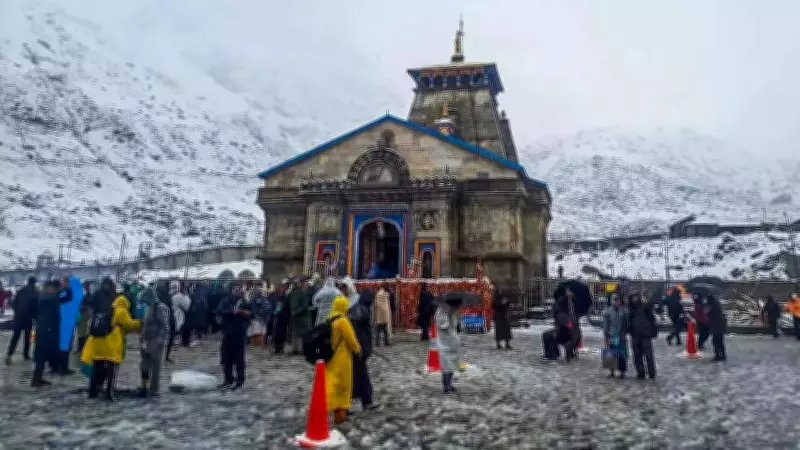
- In Uttarakhand, the Chardham Devasthanam Board manages the sacred Badrinath and Kedarnath shrines.
The government's clarification comes at a time when thousands of temples across India remain under the management of various state-supervised Devaswom Boards. The constitutional bench continues to examine the delicate balance between religious freedom and state regulation of religious institutions' secular activities.






