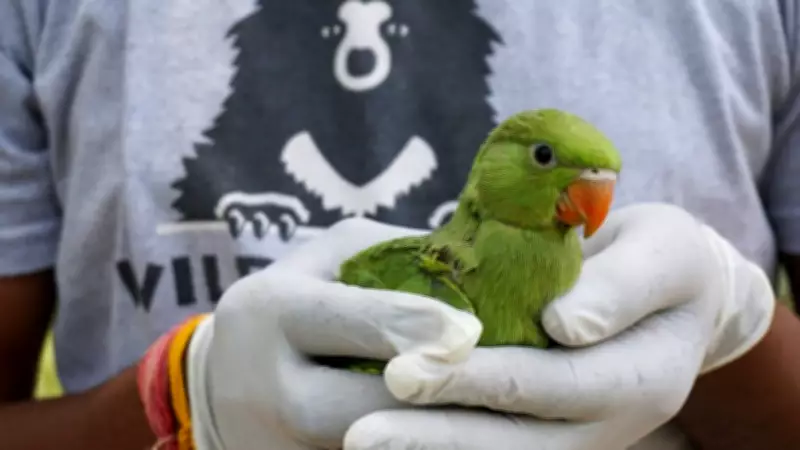
Police in Chandigarh have registered a formal case against a local resident for the alleged illegal possession and confinement of two Indian rose-ringed parakeets, a protected species under Indian wildlife laws. The action follows a detailed complaint filed by forest department officials, highlighting serious violations of the Wildlife Protection Act of 1972.
Legal Action Under Wildlife Protection Act
The accused, identified as Sandeep Kumar, a resident of Sector 24 in Chandigarh, now faces charges under multiple sections of the Wildlife Protection Act. Specifically, the case has been registered at Police Station Sector 11 under Sections 9, 39(3)(A), and 51 of this crucial environmental legislation. These provisions address the protection of specified wild animals, penalties for contravention, and the punishment for offenses, respectively.
Complaint Filed by Forest Department Official
The formal complaint was submitted by Jatinder Singh, who serves as the Range Forest Officer stationed at Paryavaran Bhawan in Sector 19-B, Chandigarh. This official action underscores the collaborative efforts between the UT Forest and Wildlife Department and local law enforcement agencies to combat wildlife-related crimes in the region.
Tip-Off from Former Union Minister
According to wildlife department officials, the investigation was initiated following specific information received from former Union Minister Maneka Gandhi. The prominent animal rights activist alerted authorities about the alleged illegal captivity of the two Indian parakeets by the accused individual, demonstrating how citizen vigilance can support wildlife protection efforts.
Rescue Operation and Veterinary Care
In response to this information, a dedicated team from the wildlife department conducted a thorough inspection of the area on January 24. During this operation, officials discovered and successfully rescued the two parakeets that were being confined inside the accused's residence. Both birds have since been placed under the professional supervision of the department's veterinary doctor.
Officials have confirmed that the rescued parakeets are currently in a safe and secure environment. Their health condition is being closely monitored by veterinary experts to ensure their well-being following the stressful period of illegal captivity. The department has outlined that further action regarding the rehabilitation and eventual release of these birds will be conducted according to established wildlife conservation protocols.
Ongoing Investigation and Legal Implications
Police authorities have indicated that further investigation is actively underway to determine several crucial aspects of this case. Investigators are working to establish how the protected birds were originally procured and whether any other individuals were involved in the commission of this wildlife offense. The comprehensive nature of this investigation reflects the seriousness with which authorities are treating this violation of environmental laws.
Protected Status of Indian Rose-Ringed Parakeets
According to official information from the wildlife department, the Indian rose-ringed parakeet enjoys protected status as a species listed under Schedule II of the Wildlife Protection Act, 1972. This classification means that keeping, capturing, or confining these birds without obtaining proper official permission constitutes a punishable offense under Indian law. The legal framework provides significant penalties for such violations, emphasizing the importance of wildlife conservation in India's environmental protection efforts.
The case serves as an important reminder about the legal protections afforded to wildlife species in India and the consequences of violating these crucial environmental regulations. It also highlights the effectiveness of inter-agency cooperation between forest department officials and police authorities in addressing wildlife crimes in urban areas like Chandigarh.