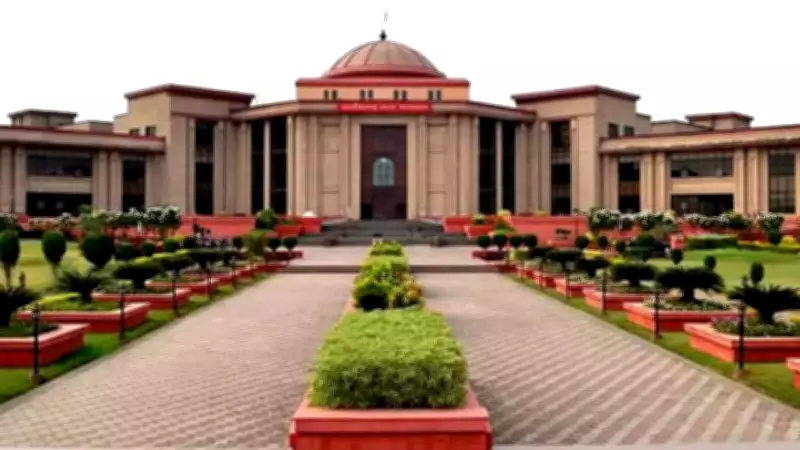
Chhattisgarh High Court Overturns Acquittal, Awards Life Term in 2015 School Sexual Assault Case
In a significant ruling, the Chhattisgarh High Court has set aside a 2017 trial court order that acquitted three individuals involved in the sexual assault of a nine-year-old girl at a mission school in Koriya district. The division bench, comprising Chief Justice Ramesh Sinha and Justice Ravindra Kumar Agrawal, allowed the state's appeal on Tuesday, delivering a verdict that emphasizes the weight of a survivor's testimony in such cases.
Court Sentences Primary Accused to Life Imprisonment
The bench sentenced the 50-year-old primary accused to life imprisonment under Section 6 of the Protection of Children from Sexual Offences (POCSO) Act and Section 376 of the Indian Penal Code (IPC). Additionally, a fine of Rs 10,000 was imposed on him. The court found that the survivor's evidence was credible and did not require corroboration as a matter of law, marking a pivotal stance in judicial proceedings for sexual assault cases.
Key Observations on Survivor Testimony
The division bench made several critical observations regarding the treatment of survivor testimony in court. It stated that a survivor of sexual assault is not an accomplice, and her evidence does not necessitate corroboration as a legal requirement. Instead, corroboration is a matter of prudence rather than a condition for conviction.
The judges emphasized: "If a survivor's testimony is credible, natural, consistent, and trustworthy, the court may act upon it without independent corroboration." This principle underscores the court's commitment to ensuring justice for victims, particularly in a tradition-bound society where women and girls may be reluctant to report such incidents due to societal pressures.
Conviction of Other Staff Members
Two other staff members, aged 23 and 36, were convicted under Section 119 of the IPC for public servants concealing a design to commit an offence. The court sentenced them to seven years of rigorous imprisonment along with a fine of Rs 5,000 each. The bench remarked that as public servants, they had a statutory duty to prevent the crime but instead chose deliberate concealment, exacerbating the severity of their actions.
Background of the Incident
The incident occurred in September 2015 at a mission school hostel in Koriya district. The survivor, a Class 4 student, was assaulted after she entered the boys' washroom because the girls' facility was locked. Her mother filed a report at Podi police station after being informed of her daughter's ill health, leading to medical examinations that confirmed multiple injuries.
During the investigation, the survivor identified the primary accused in a test identification parade at Manendragarh sub-jail. The High Court noted that the trial court in Baikunthpur erred in its 2017 judgment by acquitting the respondents, as the survivor's testimony was consistent and supported by the initial medical report and Forensic Science Laboratory (FSL) findings.
Court's Final Directions
The court directed all three convicts to surrender before the trial court within two weeks to serve their sentences. This ruling not only delivers justice for the survivor but also sets a precedent for handling similar cases, reinforcing the importance of survivor testimony in securing convictions under the POCSO Act and IPC.