In a significant ruling aimed at strengthening access to justice for the underprivileged, the Chhattisgarh High Court has issued a directive to all family courts in the state to constitute and maintain dedicated panels of legal experts. This move is designed to ensure that poor litigants, especially women and vulnerable parties, receive effective and timely legal representation.
Court Sets Aside Divorce Decree, Highlights Systemic Failure
The bench's order came while hearing an appeal from a woman challenging a divorce decree passed by a family court. The case revealed a critical lapse: the woman, appearing before the family court in 2022, had orally expressed her financial inability to hire a lawyer and her difficulty in attending every hearing. Despite this, the family court proceeded ex-parte and granted a divorce in favor of her husband in February 2024, without ensuring she had legal aid.
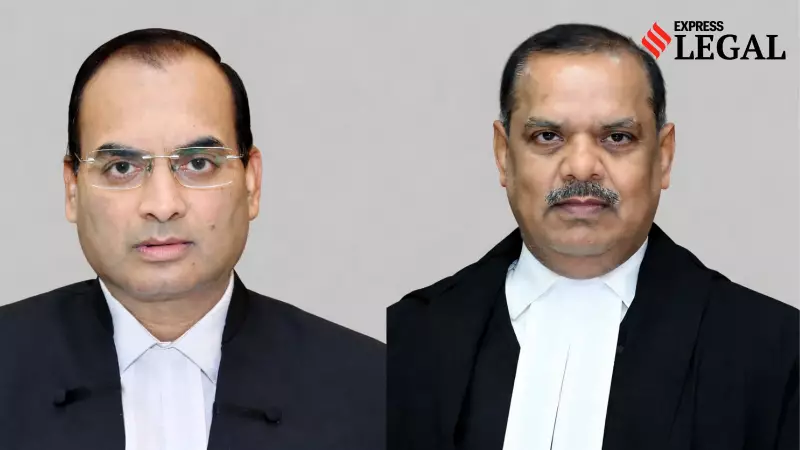
The division bench of Justices Sanjay K Agrawal and Sanjay Kumar Jaiswal strongly criticized this approach. The court observed that the family court had legally erred by not providing free legal aid on her oral request as mandated by the National Legal Services Authority Regulations, 2010, and the Chhattisgarh Family Courts Rules, 2007. This failure, the bench stated, resulted in a "miscarriage of justice" and violated her fundamental right under Article 21 of the Constitution.
Directives for Meaningful Access to Justice
The High Court issued clear and actionable directives to rectify the systemic issue. It emphasized that the responsibility of family courts to provide legal aid cannot be an empty formality.
The key orders are:
- All family courts in Chhattisgarh that have not yet maintained a separate panel of legal experts as per Rule 14(1) of the 2007 Rules must do so expeditiously and without further delay.
- When a party is unable to engage an advocate, the family court must directly assign a legal expert from its own panel instead of merely referring the litigant to the District Legal Services Authority (DLSA).
- The fees for these panel advocates will be borne by the state government as part of the free legal aid scheme.
The bench underscored that merely recording in an order that a litigant may approach the DLSA, without ensuring actual representation, defeats the statutory mandate. The objective of the Family Courts Act is to secure "real and meaningful access to justice" for vulnerable groups.
Case Remanded, Legal Aid to be Provided
Consequently, the High Court set aside the ex-parte divorce decree passed by the family court. The bench noted the family court had "no jurisdiction to proceed ex-parte" when the matter was listed in January 2024.
The court directed the family court to restart the case from the stage of proceedings in November 2023. Crucially, it ordered the DLSA to provide free legal aid to the appellant wife in accordance with the national regulations, ensuring she has competent representation for the fresh proceedings.
This judgment reinforces the principle that free legal aid is not charity but a state's duty, crucial for upholding constitutional guarantees of fairness and equal justice for all citizens, irrespective of their economic status.