

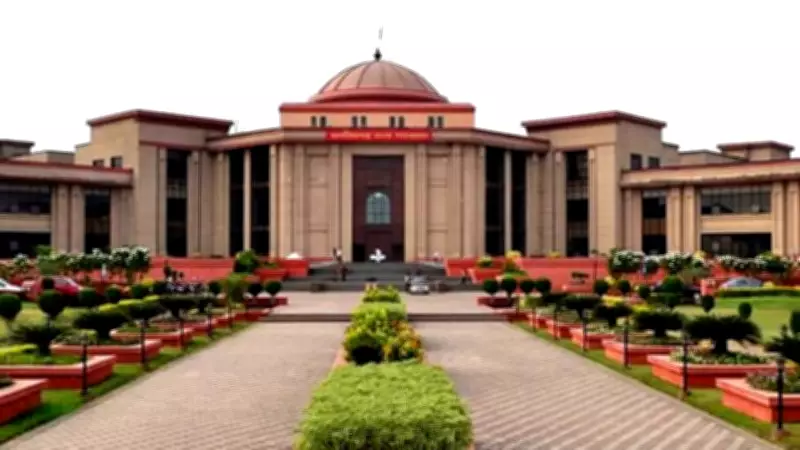
Chhattisgarh High Court Delivers Landmark Ruling on Pre-FIR Hearings
In a significant legal decision, the Chhattisgarh High Court has firmly established that individuals facing potential criminal charges possess no inherent right to be heard before the formal initiation of legal proceedings or the registration of a First Information Report (FIR). This ruling emerged from a detailed judgment delivered by Justice Bibhu Datta Guru on Wednesday, which addressed a contentious writ petition challenging procedural aspects of a corruption investigation.
Case Background: Medical Equipment Procurement Scandal
The court's decision came while dismissing a petition filed by a senior medical officer who was contesting a government recommendation to register an FIR against him. The petitioner, who served as the then Joint Director-cum-Superintendent at Dr. Bhimrao Ambedkar Memorial Hospital in Raipur, faced allegations of corruption and misappropriation of public funds totaling approximately Rs 18.45 crore.
These serious accusations stemmed from the purchase and installation of advanced medical equipment, specifically a PET-CT Scan machine and a Gamma Camera, at the state-run hospital. The controversy prompted a thorough internal investigation, leading to the current legal battle.

Investigation Findings and Petitioner's Defense
A six-member internal committee conducted an inquiry into the matter and recorded adverse findings against the medical officer. The committee's report highlighted several procedural lapses and noted a concerning lack of proper financial sanctions during the procurement process. Based on these findings, the government subsequently recommended filing an FIR to initiate formal criminal proceedings.
The petitioner's legal counsel mounted a vigorous defense, arguing that the recommendation for an FIR was arbitrary and lacked substantial material basis. They contended that the medical officer's role was strictly limited to providing technical specifications for the equipment, while the actual procurement process was managed entirely by the Chhattisgarh Medical Services Corporation Limited (CGMSC).
Furthermore, the defense emphasized that the inquiry committee failed to provide the petitioner with an opportunity to present his side of the story, which they claimed constituted a violation of fundamental principles of natural justice.
State's Counterarguments and Judicial Analysis
The State counsel presented a compelling counterargument, asserting that the internal committee functioned merely as a fact-finding body without adjudicatory powers. They maintained that the government retains independent authority to investigate cognizable offences and that prospective accused individuals cannot demand a hearing before an investigation formally commences.
Justice Guru's comprehensive analysis revealed that the petitioner had been actively involved at crucial stages of the procurement process. The court noted his participation in furnishing estimated costs and providing technical specifications, indicating more than peripheral involvement in the controversial transactions.
Court's Legal Reasoning and Final Verdict
In his landmark observation, Justice Guru stated: "A prospective accused has no vested right to be heard prior to initiation of criminal proceedings as the Bharatiya Nagarik Suraksha Sanhita (BNSS) does not provide for a right of hearing before the registration of an FIR."
The court further clarified that the inquiry committee served as a preliminary body assisting the government and did not possess the authority to determine final legal liabilities. Justice Guru emphasized that courts should exercise restraint in interfering with investigating agencies' powers during the initial stages of criminal proceedings.
The judgment made a crucial distinction regarding natural justice principles, noting that adherence to these principles is not mandatory during the reporting stage of a criminal offence. The High Court found no merit in the petition, concluding that the inquiry report disclosed prima facie irregularities involving substantial public funds that warranted further investigation.

Consequently, the court vacated the earlier interim order and dismissed the writ petition in its entirety, thereby allowing the state government to proceed with its investigation into the alleged corruption case.





