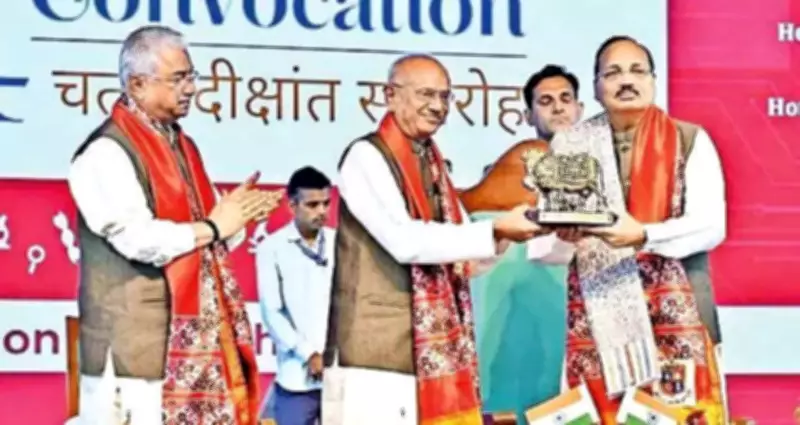
CJI Surya Kant Calls Forensic Science a 'Protective Shield' for Justice System
In a significant address at the National Forensic Sciences University (NFSU) convocation in Ahmedabad, Chief Justice of India Surya Kant on Friday urged graduating students to uphold their discipline as a "raksha kavach (protective shield)" for the justice system. He emphasized that forensic science is essential for protecting the integrity of justice, especially in recent times marked by technological advancements.
Forensic Science in the Digital Age: A New Frontier
The CJI highlighted how the digital age has transformed crime and investigation. "The digital age transformed not only how crimes are committed but also how truth must be discovered," he stated. He pointed to challenges such as cyber intrusions, digital frauds, identity manipulations, and international data crimes, which demand a higher level of analytical sophistication from forensic professionals.
In this environment, forensic science evolves beyond a mere technical field. "It becomes a protective shield safeguarding the integrity of justice against both technical deception and informational chaos," the CJI explained, underscoring its pivotal role in modern justice.

Bridging Science and Law: The Stabilising Force
CJI Surya Kant underlined the increasing dependence of courts on forensic experts who can bridge scientific complexity with legal standards. This is particularly crucial when evaluating electronic evidence or handling technologically advanced disputes.
"Your expertise, therefore, serves as a stabilising force, ensuring that technological advancement strengthens rather than undermines the rule of law," he told the graduates. He added that when forensic science functions as a 'raksha kavach', it does more than resolve individual cases; it sustains institutional legitimacy and public trust.
Ethical Clarity and Public Trust
The CJI stressed the importance of ethical practices in forensic science. "The stabilising role you perform in interpreting complex digital evidence inevitably places public trust in your hands," he noted, urging students to remain acutely aware of their responsibilities.
Concluding his address, he encouraged the graduating students: "As you step beyond these walls, you join a community committed to ensuring that justice in India remains both principled and precise. May you pursue truth with intellectual discipline, apply knowledge with ethical clarity, and ensure that forensic science continues to serve as a 'raksha kavach', protecting the integrity of justice in our times."
This call to action highlights the critical need for forensic science to adapt and thrive in an era where digital crimes pose new threats to justice and societal trust.