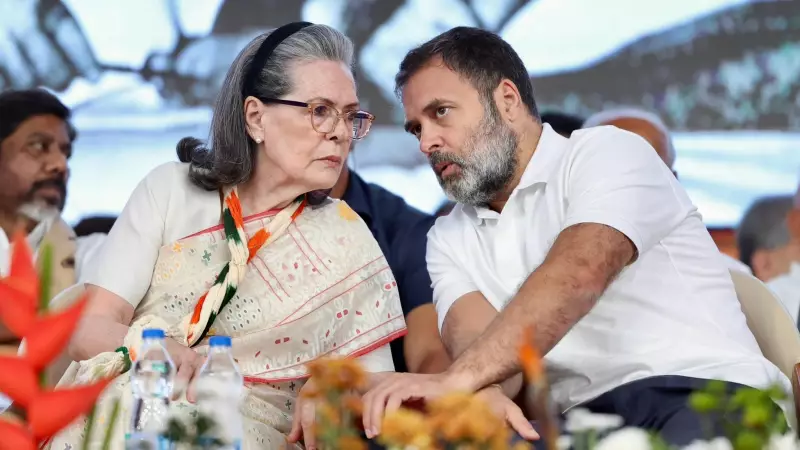
A Delhi court on Tuesday delivered a significant development in the long-running National Herald case, refusing to take cognisance of a prosecution complaint filed by the Enforcement Directorate (ED). Special Judge Vishal Gogne declined to accept the ED's chargesheet against senior Congress leaders Sonia Gandhi and Rahul Gandhi, along with five others, in a money laundering case valued at approximately Rs 2,000 crore.
Court Cites Deficiencies in ED's Complaint
The court did not issue formal notices to the accused, including former Congress president Sonia Gandhi and Leader of Opposition Rahul Gandhi. Instead, it directed the federal probe agency to first rectify the deficiencies identified in its chargesheet. This decision marks a procedural setback for the ED in its high-profile investigation into the alleged misappropriation of funds related to the now-defunct National Herald newspaper.
The case originated from a private criminal complaint filed by Bharatiya Janata Party leader Subramanian Swamy, who was then a Rajya Sabha MP. The complaint alleged cheating and misappropriation of funds in the acquisition of the newspaper's assets by Young Indian Private Limited, a company in which the Gandhis held significant stakes.
Chronology of the National Herald Legal Battle
The legal saga spans over a decade, featuring numerous court hearings and orders. Here is a timeline of the key events:
January 2013: Subramanian Swamy files the National Herald case in a Delhi court against Sonia Gandhi, Rahul Gandhi, their associated companies, and other individuals.
June 26, 2014: A Delhi court summons the Gandhis as accused in the criminal complaint for alleged cheating and misappropriation of funds.
December 2014: The Delhi High Court stays the proceedings against the Gandhis and extends the stay until the disposal of their appeals.
December 7, 2015: The Delhi High Court refuses to quash the lower court's summons issued to Sonia and Rahul Gandhi.
December 19, 2015: Sonia Gandhi, Rahul Gandhi, and other accused including Motilal Vora and Oscar Fernandes appear before a metropolitan magistrate in Patiala House Courts. They are granted bail.
February 2016: The Supreme Court rules that the trial against the Gandhis shall proceed.
May 2018: A Delhi court dismisses an application by Swamy seeking a direction for the accused to admit or deny certain Income Tax documents.
December 2018: The Supreme Court allows the Income Tax department to re-open the tax assessments of Rahul and Sonia Gandhi for the financial year 2011-12. Separately, the Delhi High Court directs Associated Journals Ltd (AJL) to vacate Herald House in Delhi.
August 2022: The ED conducts search operations at Herald House in Delhi and 11 other locations as part of its money laundering probe.
November 2023: The Enforcement Directorate issues a provisional attachment order for properties worth Rs 751.9 crore in the case against Young Indian and AJL.
April 2024: The PMLA Adjudicating Authority upholds the attachment of assets worth Rs 752 crore linked to the National Herald.
April 2025: The ED files its prosecution complaint (chargesheet) against seven persons, including the Gandhis. The court, however, refuses cognisance and asks the ED to fill the deficiencies.
Implications and Next Steps
The court's refusal to take immediate cognisance means the case cannot progress to the trial stage based on the current chargesheet. The ED must now address the court's concerns and re-submit a compliant document. This development is seen as a temporary relief for the Congress leadership in a case that has been a major political flashpoint.
The legal proceedings have also involved parallel battles with the Income Tax department over re-assessment of taxes and the eviction of AJL from its Herald House premises. The case continues to be closely watched for its significant political and legal ramifications.