

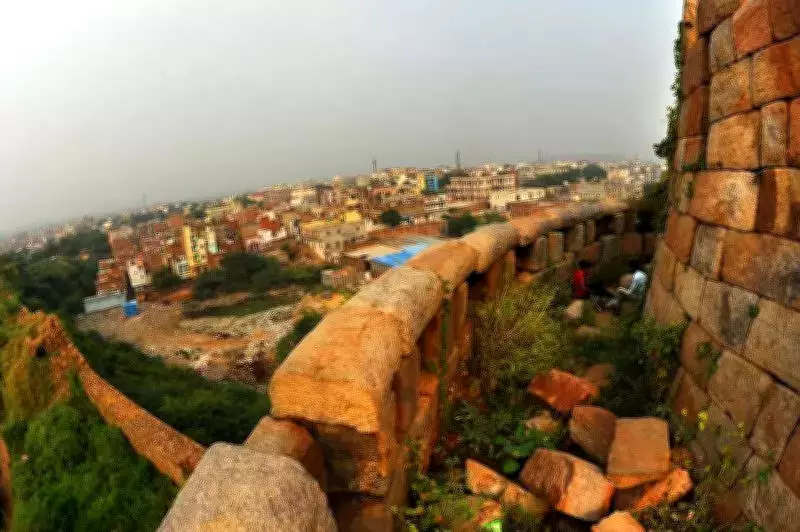
Delhi High Court Frustrated by Delays in Tughlaqabad Fort Encroachment Survey
The Delhi High Court has expressed strong dissatisfaction with the prolonged delay in conducting a comprehensive survey of the historic Tughlaqabad Fort to identify illegal encroachments. On Wednesday, the court reluctantly granted an additional four months to complete this crucial process, while issuing stern warnings to government authorities about their responsibilities toward preserving national heritage.
Judicial Rebuke Over Administrative Inaction
A bench comprising Chief Justice DK Upadhyaya and Justice Tejas Karia delivered a sharp rebuke to central government counsel regarding the sluggish progress. "You took six months merely to appoint a survey committee despite clear court orders," the bench noted with evident frustration. "Even after forming the committee, you failed to ensure the survey actually commenced. From September to March, your only achievement was finalizing an agency for the survey."
The court emphasized that continued delays would result in summoning responsible officers personally. "We will start summoning the officers, then it will pinch. Officers should understand all this," the bench warned, highlighting the gravity of the situation.

Balancing Heritage Preservation and Human Concerns
The judicial bench made a crucial distinction between different types of occupants at the historic site. "More than yours, it is our heritage that we must protect," the court declared. "But this is also a human problem requiring careful handling. We must differentiate between original residents and those who have established shops outside the monument through encroachment."
The court acknowledged that numerous families from economically disadvantaged backgrounds have resided in the fort area for extended periods. Their potential displacement creates significant humanitarian considerations that authorities must address sensitively alongside heritage conservation efforts.
Operational Directives and Security Measures
To expedite the long-delayed survey, the court issued several specific directives:
- The committee formed last year has identified a private agency for conducting the survey. A formal work order must be issued to this agency within ten days.
- Given previous instances where surveys could not proceed due to security concerns, the court ordered comprehensive police protection for survey teams. The Delhi Police Commissioner bears personal responsibility for ensuring this protection whenever requested by the Director General of the Archaeological Survey of India.
- The appointed survey agency will be "personally liable and accountable to the court" for their work and findings.
Broader Context and Historical Background
The High Court assumed monitoring responsibility for this matter following a referral from the Supreme Court. The ancient Tughlaqabad Fort, designated a monument of national importance, reflects significant historical ethos that requires preservation from encroachments and illegal constructions.
Despite previous Supreme Court prohibitions against construction activities in the area, the High Court noted "rampant and unabated" illegal building continues. The court has already imposed restrictions on all land transactions and construction within the fort precincts.
Comprehensive Committee Formation
To address both encroachment removal and rehabilitation concerns, the court established a high-level committee with representatives from multiple agencies:
- Union Housing and Urban Affairs Ministry
- Urban Development Department
- Municipal Corporation of Delhi
- Delhi Police
- State Government
- Archaeological Survey of India
- Delhi Development Authority
This committee must develop joint policy decisions addressing illegal encroachment removal while planning rehabilitation for potentially displaced residents.

Survey Findings and Legal History
The Archaeological Survey of India previously informed the High Court that initial demarcation suggests no encroachments exist inside the monument, outside the monument, or within its boundary walls. However, significant encroachments have been identified outside the perimeter.
This legal battle originates from a Public Interest Litigation filed in 2001 seeking protection, maintenance, and preservation of the historic fort. The Supreme Court directed the High Court to monitor this issue and, in February 2016, declared the entire fort area as protected heritage.
The extended timeline granted by the court represents a final opportunity for authorities to demonstrate serious commitment to resolving this complex intersection of heritage conservation, administrative responsibility, and humanitarian considerations.





