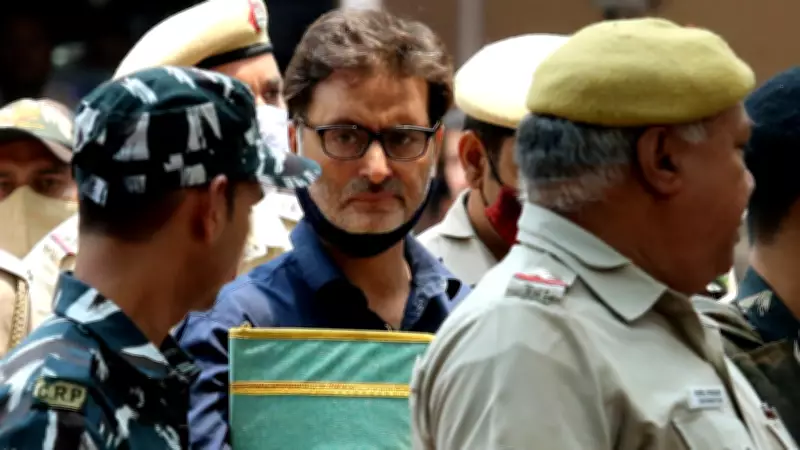
The Delhi High Court has granted the National Investigation Agency (NIA) a last opportunity to file its response to various claims made by Kashmiri separatist leader Yasin Malik, who is currently incarcerated in Tihar jail. This development comes as the NIA seeks to enhance Malik's punishment from life imprisonment to a death sentence in a 2016 terror funding case.
Court Proceedings and Malik's Opposition
During a virtual hearing, Malik, who is representing himself, opposed the NIA's request for additional time to submit their reply. He argued that the agency has repeatedly sought extensions, stating, "Appeal bhi inki hi hai and they want time to file the reply. Har date inki yehi hai ki humme ek aur date de do" (This is NIA's appeal, and they keep asking for time. On the last date too, they sought time).
However, the bench of Justices Navin Chawla and Ravinder Dudeja orally remarked that there is no urgency in the matter, as the appeal pertains solely to the enhancement of punishment. They scheduled the next hearing for April 22, emphasizing that the case does not require immediate attention.
Malik's Denial and Allegations
In an affidavit submitted to the high court in a sealed cover in August last year, Malik reportedly denied any role in terror funding. He claimed that the NIA failed to produce substantial evidence against him and alleged that he is being made a scapegoat in this high-profile case.
Furthermore, Malik is learned to have accused the state of attempting to erase the history of engagement. He purportedly stated that after his arrest in 1990, he was actively engaged by six consecutive governments under the leadership of then Prime Ministers V P Singh, Chandra Shekhar, P V Narasimha Rao, H D Deve Gowda, Inder Kumar Gujral, Atal Bihari Vajpayee, and Manmohan Singh.
Background of the Case
Yasin Malik, the former chief of the banned terror outfit Jammu and Kashmir Liberation Front (JKLF), has been lodged in Tihar jail since 2019. The NIA's appeal for enhancement of his punishment stems from a 2016 terror funding case, where Malik was convicted and sentenced to life imprisonment.
This is not the first time the NIA has sought time to respond; in November last year, the agency similarly requested an extension to file their reply to Malik's submissions. The ongoing legal battle highlights the complexities and delays often associated with high-stakes terrorism cases in India's judicial system.
The Delhi High Court's decision to grant a final opportunity underscores the importance of due process while balancing the need for timely resolution in matters of national security and justice.