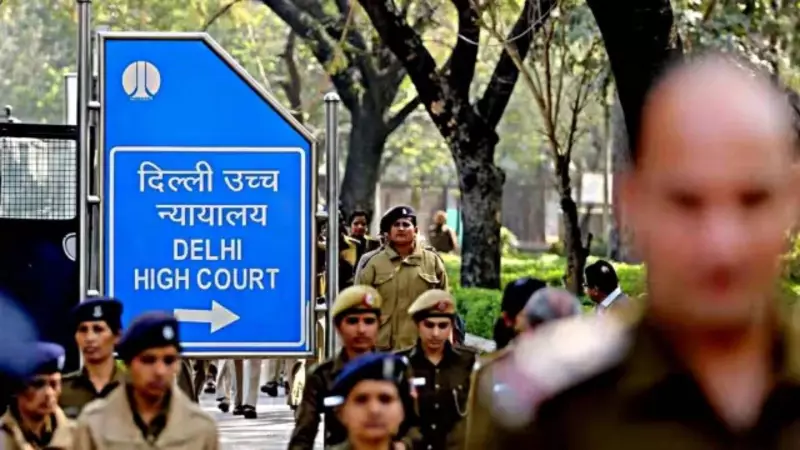
Emergency Sunday Hearing Leads to Parole Grant
In an unprecedented Sunday sitting, the Delhi High Court granted four weeks of parole to Tasleem, a 53-year-old convict serving life imprisonment for a 1997 gangrape case. The emergency hearing was convened after his sister passed away from a heart attack earlier that morning.
Justice Sanjeev Narula presided over the virtual court session that included court staff, police representatives, and legal counsel. The judge had been previously handling Tasleem's case regarding premature release from prison.
Family Tragedy Spurs Urgent Legal Action
The sequence of events began on Friday when the court had granted Tasleem emergency custody parole for just one day - Saturday, November 8. This temporary release allowed him to visit his 60-year-old sister who was critically ill in the ICU of a private Delhi hospital.

Despite being granted permission to stay from 10 am to 5 pm, Tasleem claimed he could only see his sister for approximately 15 minutes. He was taken to the hospital around 1 pm and returned to his barrack by 3 pm.
Tragedy struck at 8 am on Sunday when his sister succumbed to a heart attack. She had been suffering from post-tuberculosis lung complications. The situation became more pressing as Tasleem's 81-year-old mother was left without her primary caregiver.
The convict's lawyer, Sarthak Maggon, filed an urgent application seeking immediate parole on Sunday morning. With the last rites scheduled for 5 pm at Mayur Vihar graveyard, time was critically short.
Swift Judicial Response
The urgency was communicated to Justice Narula through the judge's court master via telephone on Sunday morning. The matter was promptly registered and listed for hearing.
Around noon, Justice Narula assembled his court remotely. The police informed the court that they had verified the details of the sister's death and raised no objections to the four-week parole request.
Within minutes, Justice Narula dictated the order virtually, granting Tasleem parole for four weeks. The judge specifically noted the convict's need "to perform last rites and be with the family in this critical hour."
By 12:50 pm, the Delhi HC's order was emailed to Tihar jail authorities by Maggon. However, the lawyer claimed that as of 4 pm, Tasleem had not been released from jail despite the court's clear directive.
Background of the Case
Tasleem was convicted in a gangrape offense dating back to 1997. A trial court sentenced him to life imprisonment in 1999. The Delhi HC upheld his conviction in 2015, and the Supreme Court dismissed his final appeal in 2017.
His applications before the Sentence Review Board seeking premature release have been rejected solely on grounds of the heinous nature of his offense. In February this year, he moved the Delhi HC seeking directions for his early release.
Justice Narula had previously, in an October 8 order, directed the Director General of Tihar Prisons and Home Secretary of the Delhi government to appear personally before the court. This was to ensure "accountability" after the court observed lack of progress in standardizing Sentence Review Board functioning.
The judge had criticized the Boards for dealing with convict matters in a "superficial and perfunctory manner" and noted the absence of a consistent framework in deciding remission applications.
Notably, Tasleem's social investigation report records his jail conduct as "good and satisfactory." The report also highlights his active participation in prison rehabilitation programs as a factory worker and his responsible attempts to maintain family connections. It documented his exemplary conduct during 13 separate furlough occasions and increased emergency parole periods.