

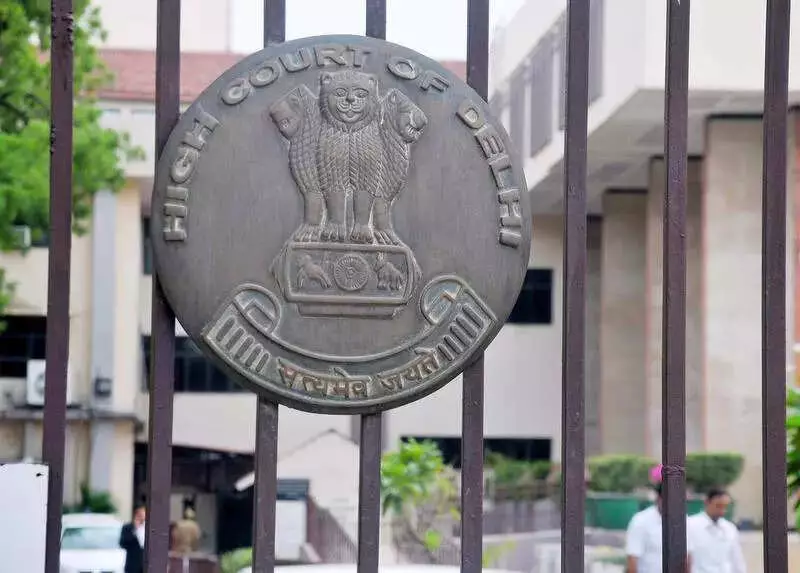
The Delhi High Court delivered a sharp rebuke to the city government on Wednesday, expressing grave concern over the flourishing illegal market for second-hand vehicles. The court directly linked this regulatory gap to serious security threats, citing the infamous Red Fort blast case where an involved car had been resold multiple times without proper documentation.
Court's Stern Warning on Security Lapses
A bench comprising Chief Justice DK Upadhyaya and Justice Tushar Rao Gedela did not mince words. "A car changed hands four times, but the original owner's name has not changed on paper. So, what happens? That man (the original owner) goes to the slaughterhouse … What is this? How are you permitting this?" the bench questioned. The judges pointedly asked the Delhi government if it would wait for more bomb blasts before acting.
The court's remarks came during a hearing on a Public Interest Litigation (PIL) filed by the Towards Happy Earth Foundation. The hearing revealed a shocking fact: not a single used car dealer is registered with the authorities in the national capital. The bench has directed the Delhi government to file a formal response explaining this failure to regulate the sale and transfer of used vehicles.

Rules Exist Only on Paper
The PIL focused on the poor implementation of Rules 55A to 55H of the Central Motor Vehicles Rules, which were introduced in December 2022 specifically to regulate authorised dealers of registered vehicles. These rules were designed to bring accountability and traceability to the second-hand vehicle market.
However, the petitioner's counsel argued that the rules have utterly failed in practice due to regulatory gaps and procedural hurdles. "In reality, most used vehicles pass through multiple dealers before reaching the final buyer, but the rules recognise only the first transfer to the initial authorised dealer. As a result, the chain of custody breaks after the first step, defeating the very purpose of accountability," the petition stated.
The scale of the problem is massive. The plea noted that only a tiny fraction of India's estimated 30,000 to 40,000 used-vehicle dealers are registered under the authorised-dealer framework. Nationwide, the registration count stands at a mere five or six.
Online Aggregators Also Under Scrutiny
The court also turned its attention to major online players. It specifically questioned the popular platform Cars24 on why it had not registered itself as a dealer. The company's counsel argued that it operates merely as an online aggregator and does not require registration.
The bench, however, was not convinced by this distinction. It observed that the online portal engages in the same business as physical used car dealers, charges a fee for its services, and therefore cannot claim to be exempt from the regulations meant to bring transparency to the trade.
The consequence of this widespread non-compliance is a severe security and accountability vacuum. Lakhs of vehicles continue to circulate on Indian roads with no official record of who is actually in possession of them, creating a significant challenge for law enforcement agencies.






