

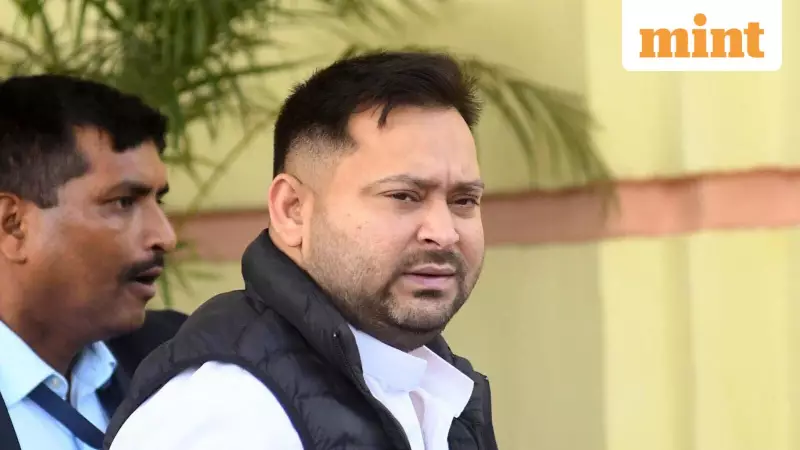
The Delhi High Court has stepped into the ongoing legal battle surrounding the alleged IRCTC hotels scam, issuing a notice to the Central Bureau of Investigation (CBI). This move comes in response to a petition filed by Rashtriya Janata Dal (RJD) leader Tejashwi Prasad Yadav, challenging a trial court's order that framed charges against him.
Court Proceedings and Key Dates
On Tuesday, Justice Swarana Kanta Sharma presided over the hearing and formally sought the CBI's stance on Tejashwi Yadav's appeal. The court has scheduled the next hearing for January 14, 2025. Notably, this date will also see the hearing of a similar plea filed by Tejashwi's father and former Union Railway Minister, Lalu Prasad Yadav.
Details of the IRCTC Hotels Case
The roots of this high-profile case lie in alleged irregularities in the awarding of operational contracts for two hotels owned by the Indian Railway Catering and Tourism Corporation (IRCTC) to a private company. The trial court had taken a significant step on October 13, 2025, by framing charges against a total of 14 accused individuals.

The list of accused includes Lalu Prasad Yadav, his wife and former Bihar Chief Minister Rabri Devi, their son Tejashwi Prasad Yadav, and 11 others. The charges encompass serious sections of the Indian Penal Code (IPC) and the Prevention of Corruption Act.
Breakdown of Charges and Accused
The charges framed by the trial court are severe and carry substantial prison sentences. A common charge of criminal conspiracy under IPC Section 120B has been directed against all 14 accused.
The specific charges include:
- Cheating (IPC Section 420): Framed against Lalu Prasad, Rabri Devi, Tejashwi Yadav, M/s LARA Projects LLP, Vijay Kochhar, Vinay Kochhar, Sarla Gupta, and Prem Chand Gupta.
- Prevention of Corruption Act: Charges under Section 13(2) read with Section 13(1)(d) were framed against Lalu Yadav and several others, including Pradeep Kumar Goel and Rakesh Saksena. These sections pertain to criminal misconduct and abuse of official position by a public servant to obtain favors.
The legal ramifications are considerable. The maximum punishment under the Prevention of Corruption Act can extend up to 10 years of imprisonment, while the charge of cheating carries a potential sentence of seven years.
Legal Implications and Next Steps
The Delhi High Court's intervention marks a critical juncture in this long-running case. By issuing notice to the CBI, the court has initiated a process to scrutinize the trial court's decision to frame charges. The outcome of the hearings on January 14 will determine whether the case proceeds to trial in the lower court based on the current charges or if the High Court intervenes to modify or quash them.
The case continues to draw significant political and public attention, given the stature of the accused and the serious nature of the allegations concerning a prestigious public sector undertaking like the IRCTC.






