

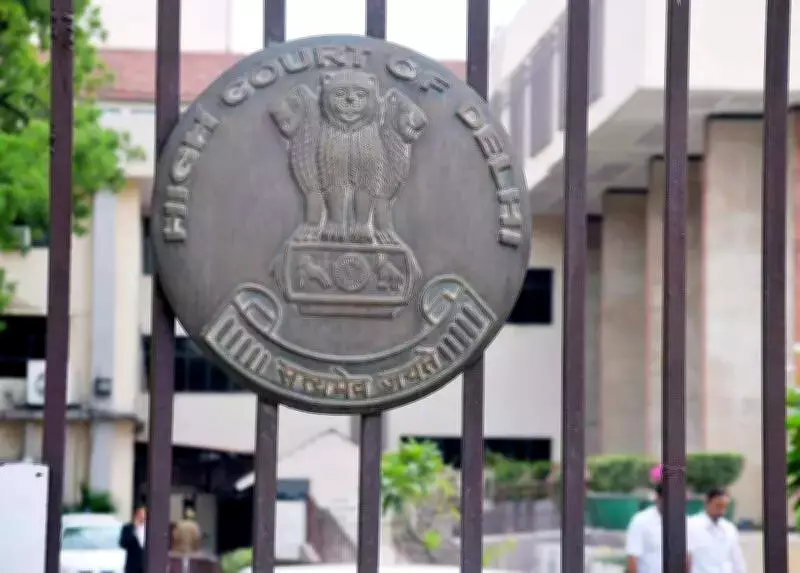
Delhi High Court Questions ILBS Free Treatment Policy, Seeks Government Response
The Delhi High Court has taken a significant step in addressing healthcare accessibility by seeking the Delhi government's official position on a public interest litigation (PIL) that demands the Institute of Liver and Biliary Sciences (ILBS) provide completely free medical treatment to all patients. This move comes as the court examines allegations that the premier government-funded hospital is not fulfilling its public health mandate.
Court Issues Notice to Government and Hospital Administration
A bench comprising Chief Justice DK Upadhyaya and Justice Tejas Karia formally issued notices to both the Delhi government and the ILBS administration regarding the petition filed by the NGO Social Justice. The court has scheduled the next hearing for April 22, 2024, allowing time for the concerned parties to prepare their responses to the serious allegations raised in the PIL.
PIL Challenges ILBS Treatment Quota System
The core argument presented in the PIL centers on ILBS's current policy that limits free treatment to only 10% of patients in its in-patient facility and 25% in the out-patient department, specifically for economically weaker sections (EWS). Advocate Satyakam, representing the petitioner, argued forcefully that this policy effectively transforms what should be a public healthcare institution into what he described as a "predominantly paid medical institution."

The legal challenge asserts that ILBS, as a fully government-funded and owned hospital specializing in serious liver conditions including hepatitis, cirrhosis, and liver cancer, should not be permitted to implement policies that create financial barriers to treatment. The petition emphasizes that this approach contradicts the fundamental purpose of establishing such specialized medical facilities with public funds.
Constitutional Violations Alleged
The PIL presents a compelling constitutional argument, claiming that ILBS's current policy violates Articles 14 and 21 of the Indian Constitution. According to the petitioners, the hospital's treatment quota system creates arbitrary and unreasonable discrimination between affluent patients who can afford treatment and indigent patients who cannot, thereby denying vulnerable populations their constitutional right to access affordable and timely healthcare.
"The exclusionary and revenue-oriented policy of ILBS has effectively converted it into a paid hospital, defeating the very purpose of its establishment," stated the PIL filed through lawyers Ashok Agarwal and Kumar Utkarsh. The document further argues that ensuring healthcare access for vulnerable and marginalized communities represents a "core obligation" of any government.
Comparison with Private Hospital Requirements
The petition draws a striking comparison between ILBS's policies and those required of private hospitals that receive government benefits. According to existing regulations, private hospitals that receive land from the government at concessional rates must provide free treatment to EWS patients—specifically 10% in in-patient departments and 25% in out-patient departments.
The PIL argues that it is "wholly incongruous" for a fully government-owned hospital like ILBS to offer only the same level of free treatment as private institutions that merely receive government concessions, rather than complete funding. This comparison highlights what petitioners see as a fundamental inconsistency in healthcare policy implementation.
Supreme Court Precedents Cited
The legal challenge references significant Supreme Court precedents that have mandated state-run hospitals to ensure equitable access to healthcare without imposing "commercial barriers." These judicial pronouncements establish a legal framework that emphasizes the government's responsibility to provide healthcare as a fundamental right rather than a commercial service.
Specific Demands of the Petition
The PIL seeks specific judicial interventions, including:

- A direction to quash ILBS's current policy limiting free treatment
- An order requiring ILBS to provide 100% of beds and medical services for free treatment to the general public, similar to other government medical institutions
- Alternatively, directions to enhance the EWS/free category quota to at least 50% of total capacity
This case represents a significant test of how India's judicial system interprets the government's healthcare obligations, particularly regarding specialized medical institutions that receive complete public funding. The outcome could establish important precedents for similar government-funded hospitals across the country.





