Delhi Police Seeks Extended Custody for AI Summit Protesters
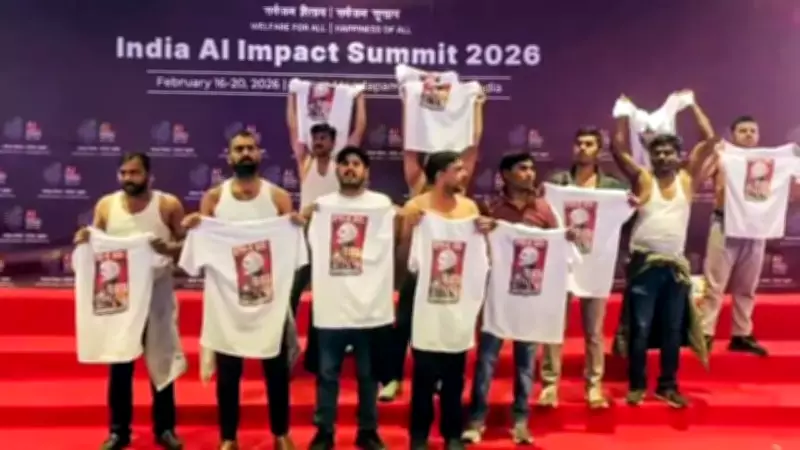
In a significant development, Delhi Police on Saturday formally requested five days' custody for the four individuals accused of orchestrating a shirtless march during the high-profile Artificial Intelligence summit at Bharat Mandapam. The police presented their case before the court, emphasizing the need for thorough investigation into what they described as a carefully planned protest.
Allegations of International Conspiracy
During the remand proceedings, Delhi Police investigators revealed startling details about the protest's origins. The authorities claimed the demonstration mirrored similar protests previously staged in Nepal, suggesting a coordinated international effort to tarnish India's global reputation. The public prosecutor informed the court that the accused had specifically targeted the India-US trade deal during their protest, raising what were described as anti-national slogans while wearing T-shirts bearing messages critical of Prime Minister Narendra Modi.
Police Justification for Extended Custody
When questioned about the necessity of five-day custody, the investigating officer provided multiple justifications. "There exists a deep conspiracy behind this incident," the officer stated, revealing that several other suspects had managed to flee the scene and remain at large. The police emphasized that proper custody was essential to:
- Uncover the full extent of the alleged conspiracy
- Recover the accused's mobile phones to trace potential funding sources
- Investigate injuries sustained by three police officers during the incident
- Determine how protesters from four different locations coordinated their actions
Defense Claims Political Targeting
The legal representation for the accused presented a starkly different narrative in court. The defense lawyer argued that the protesters were being unfairly targeted due to their political affiliations with opposition parties. The counsel further contended that peaceful political dissent should not be suppressed through such legal measures, noting that protests occur regularly across the country as part of democratic expression.
Detailed Account of the Protest Incident
According to official statements from Assistant Commissioner of Police (New Delhi) Devesh Mahla, the protest unfolded systematically. Approximately 15 Indian Youth Congress workers gained access to Hall No. 5's lobby area on Friday, where they removed outer shirts to reveal protest T-shirts before beginning their demonstration. "The four arrested individuals will be produced before the Patiala House Court, and we are registering an FIR with several serious charges," confirmed another police officer involved in the case.
Security Breach and Investigation Details
Investigators revealed concerning security lapses that enabled the protest. The accused allegedly registered online to obtain legitimate QR codes for venue access before staging their demonstration inside Bharat Mandapam. Sources cited by PTI news agency indicated that the protesters engaged in heated arguments with summit attendees and allegedly manhandled police officers on duty, potentially invoking non-bailable charges.
Perhaps most intriguing was the revelation about the protesters' original plan. Sources disclosed that the group initially intended to smuggle printed stickers on black umbrellas into the venue, but abandoned this approach fearing the umbrellas would attract security attention. Instead, they opted for the T-shirt strategy that ultimately unfolded.
Broader Implications and Ongoing Investigation
The incident has raised serious questions about summit security protocols and political protest boundaries. Delhi Police initially detained around 10 IYC workers following the demonstration, though only four faced formal arrest. Investigators are now examining whether this protest represents part of a larger conspiracy, with particular focus on potential international connections and funding sources.
As the legal proceedings continue, the case highlights the delicate balance between security concerns at international events and the rights to political expression in democratic societies. The court's decision on the custody request will significantly influence the investigation's direction and potentially set precedents for handling similar incidents at future high-profile international gatherings in India.