

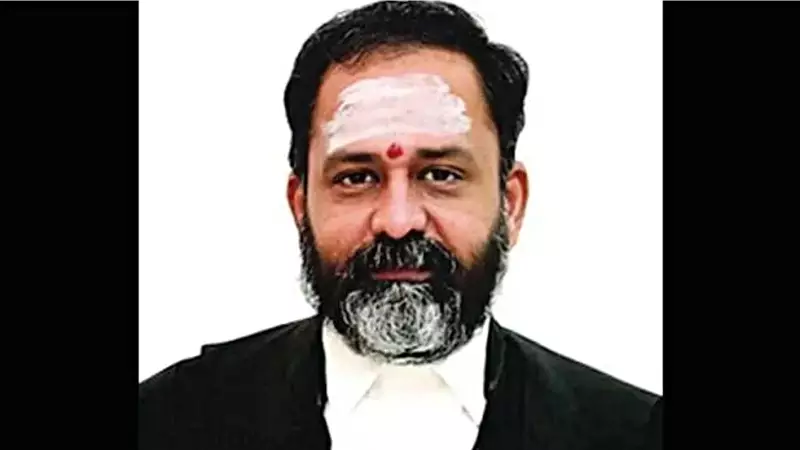
The decision by the INDIA bloc, spearheaded by the DMK, to initiate impeachment proceedings against Madras High Court Justice G. R. Swaminathan has ignited a crucial debate on judicial accountability and parliamentary oversight in India's democracy. Contrary to views that the move undermines the judiciary, the DMK argues it is a necessary constitutional step to strengthen democratic checks and balances.
The Core Argument: Parliamentary Oversight as a Constitutional Duty
In a detailed rebuttal to criticism, the DMK has clarified that the impeachment motion, signed by 120 MPs, is not a reaction to a single judicial order. Instead, it addresses a pattern of conduct by Justice Swaminathan over the past two years. The motion invokes Articles 124(4) and 217 of the Constitution, which provide for the removal of a judge for proven misbehaviour or incapacity.
The party emphasizes that in a functional democracy, while the judiciary checks the executive and legislature, the legislature must also exercise oversight over the judiciary. This reciprocal accountability ensures no institution wields unbridled power. The impeachment process is framed as this essential safeguard, not an overreach.

Allegations of Ideological Bias and Misconduct
The impeachment motion cites specific instances of alleged misconduct and bias. It claims Justice Swaminathan has consistently decided cases based on a particular political ideology, violated secular principles, and shown favouritism to lawyers from certain social sections.
Key allegations include:
- Making observations that undermined the framework of the Hindu Religious and Charitable Endowments (HRCE) department.
- During hearings on appointing non-Brahmin priests, he openly identified as a Smartha Brahmin and questioned the fitness of non-Brahmins for priesthood.
- Regularly sharing public platforms with leaders of a specific political ideology. In 2024, alongside BJP leader H. Raja, he criticized the DMK's ideology and ridiculed its former leaders.
- In 2023, stating that the Constitution's survival depends on maintaining India's "demographic profile" and adherence to "Bharatiya dharma," a remark Rajya Sabha MP Kapil Sibal said endangers the Constitution.
Furthermore, it was revealed that four months before the Thirupparankundram case, INDIA bloc MPs had written to President Droupadi Murmu and then Chief Justice B. R. Gavai, flagging concerns about Justice Swaminathan allegedly favouring advocates from the Brahmin community and those with right-wing affiliations.
A Broader Context: Judiciary Under Scrutiny
The DMK's stance highlights a broader concern about judges maintaining ideological neutrality. The argument references a similar instance in December last year, where Allahabad High Court Justice Shekhar Kumar Yadav, at a Vishva Hindu Parishad event, said the law should reflect the majority's desire.
The core contention is that a judge cannot act in a partisan manner or hold a pronounced ideological bias without compromising the integrity of the judiciary. When such concerns arise, elected representatives, as the voice of the people, have a duty to intervene through constitutional mechanisms.
The party concludes that its action is a step toward reinforcing, not weakening, India's constitutional framework. It asserts that in a democracy, neither the Chief Justice nor the Prime Minister is above the people, and holding powerful institutions accountable is the essence of a robust republic.






