ED Initiates Money Laundering Probe in Tirupati Laddu Adulteration Case
The Enforcement Directorate (ED) has officially launched a comprehensive investigation under the Prevention of Money Laundering Act (PMLA) into the high-profile Tirupati laddu adulteration scandal. According to authoritative ED sources, the agency has registered an Enforcement Case Information Report (ECIR) against the accused and commenced a formal probe into the alleged financial crimes linked to the case.
Hawala Transactions and Bribery Allegations
As detailed in the special investigation team's (SIT) supplementary chargesheet, the case centers on purported hawala-based cash transactions and illegal gratification payments. Private dairy firms and intermediaries are accused of funneling bribes to Tirumala Tirupati Devasthanams (TTD) officials to manipulate ghee tenders and secure favorable quality clearances. Forensic analysis of mobile phones, WhatsApp conversations, and Excel spreadsheets reportedly uncovered documented payments to the then general manager (procurement) of TTD, along with smaller sums to other officials, allegedly routed through cash couriers and hawala operators.
Criminal Conspiracy and Forged Documents
The SIT alleges a widespread criminal conspiracy between directors of multiple dairies and TTD officials to supply adulterated and potentially harmful ghee for the preparation of sacred prasadams, including the iconic Tirupati laddus. Ineligible dairy operations are accused of submitting falsified documents—such as experience certificates, FSSAI returns, and laboratory reports—to win tenders by quoting unrealistically low rates. Public servants are alleged to have overlooked these discrepancies in exchange for bribes, issuing favorable plant inspection reports despite clear violations.

Suppression of Critical Test Reports
The chargesheet further reveals that suppliers used additives like monoglycerides, lactic acid, and refined oils—including palm, palm kernel, and palmolein—to mimic pure cow ghee. Shockingly, it alleges that TTD officials deliberately suppressed test reports from the Central Food Technological Research Institute (CFTRI) in Mysuru, which confirmed adulteration through Beta Sitosterol-positive results, to allow the continued supply of substandard ghee.
Key Accused and Alleged Bribes
The supplementary chargesheet names several individuals as recipients of alleged bribes:
- Kaduru Chinnappanna (Accused-24), PA to the then TTD chairman, is accused of receiving 50 lakh in cash and demanding 25 per kg from a supplier.
- RSSVR Subrahmanyam (A-29), then GM (procurement), allegedly received 3.5 lakh in cash, a Samsung Galaxy S-20 phone worth 50,000, and a silver coin.
- Maddi Vijayabhasker Reddy (A-34), a dairy expert, is accused of taking 7.5 lakh for inspections, a Kundan gold coin, and 75 lakh through hawala.
- Apurva Chavda (A-5), CEO of Sri Vyshnavi Dairy, allegedly received 19.86 crore through hawala channels.
Smaller alleged payments to TTD staff and probe panel members, along with various gifts, are also documented in the chargesheet.
Hawala Network and Money Trail
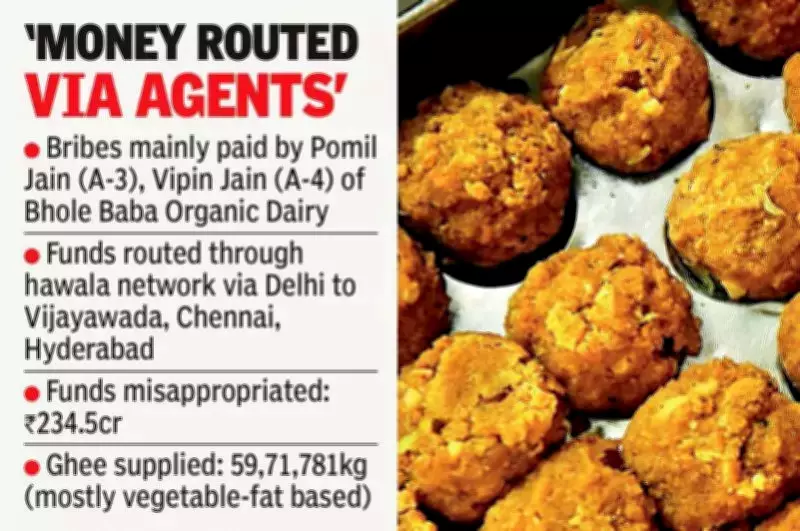
According to the SIT, bribes were primarily paid by Pomil Jain (A-3) and Vipin Jain (A-4) of Bhole Baba Organic Dairy, with funds routed through commission agents. The money trail involved round-tripping and a sophisticated hawala network that moved funds from Delhi hawala shops to agents in Vijayawada (Bharat Bhai Thakur), Chennai (Madaram Dewasi), and Hyderabad (Arjun Goswami), allegedly using a token-based currency verification system.

Scale of Adulteration and Financial Misappropriation
The SIT claims that 59,71,781 kg of adulterated ghee was supplied, leading to a misappropriation of Rs 234.51 crore. It further alleges diversion of profits through high salaries, construction of a luxury house for Pomil Jain, and purchase of commercial plots. On the technical aspect of adulteration, the chargesheet notes the ghee was largely vegetable-fat based, with subsequent tests by the National Dairy Development Board's Centre of Analysis and Learning in Livestock and Food, and the National Dairy Research Institute in Karnal, failing to detect specific animal fats such as lard or tallow.