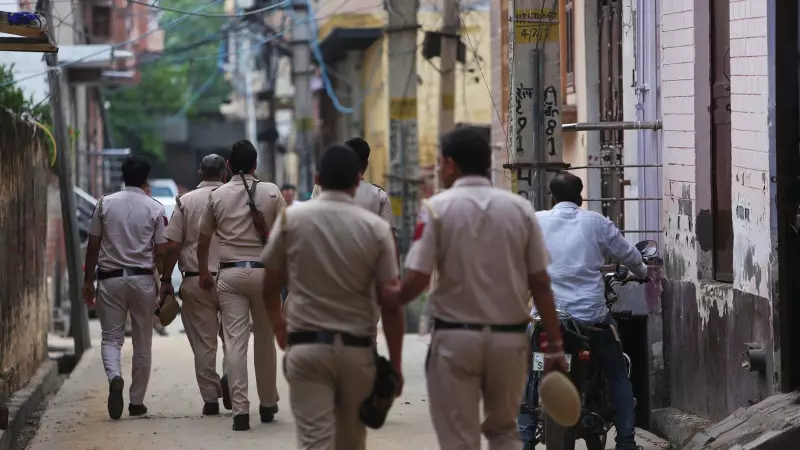
Historic Legal Proceedings Under New Criminal Law
In a landmark development for India's judicial system, the Delhi Police has initiated the first-ever trial in absentia proceedings against an absconding murder accused under the newly implemented Bharatiya Nagarik Suraksha Sanhita (BNSS). This unprecedented legal move targets Jitender Mehto, who allegedly murdered his 68-year-old employer Ramesh Bharadwaj and has been evading arrest since the January crime.
The Gruesome Crime and Investigation Breakthrough
The case dates back to January 28, 2025, when Ramesh Bharadwaj was last seen with his employee Jitender Mehto in Delhi's Narela area. Investigation revealed that the victim had recently received Rs 4.5 lakh as partial payment for a plot sale in Mukundpur, Delhi, raising suspicions about the motive behind the murder.
According to DCP (Outer North) Hareshwar Swami, multiple witnesses confirmed the deceased's frequent visits to Jitender's rented room. The police conducted detailed examination of call detail records (CDRs), location data, and movement patterns of both the victim and the suspected accomplices.
The breakthrough came on February 12, 2025, when investigators traced Jitender's son Abhishek alias Vishal through his Instagram activities. During interrogation, Abhishek confessed that he and his father had dumped Ramesh's body after the murder.
Conspiracy Uncovered and Body Recovery
Abhishek's confession revealed a deeper conspiracy involving Love Bhardwaj, the deceased's own son. The murder plot allegedly stemmed from long-standing family disputes within the Bharadwaj family. At Abhishek's direction, police recovered the victim's highly decomposed body, packed in a gunny bag, from a drain near their locality.
The investigation uncovered that Jitender Mehto had conspired with both his own son and the victim's son to execute the murder. This complex web of relationships added layers to what initially appeared to be a straightforward employer-employee dispute.
Legal Implications of BNSS Section 356
The trial in absentia provision under Section 356 of the BNSS represents a significant shift in India's criminal justice framework. This legal provision enables courts to proceed with trials even when the accused is absconding, provided the person has been officially declared a proclaimed offender.
The legal process under this section allows for:
- Framing of charges against the absconding accused
- Recording of evidence from witnesses and investigators
- Delivery of judgment based on collected evidence
- Completion of trial proceedings without the accused's physical presence
This provision aims to prevent delays in justice delivery and ensure that accused persons cannot evade legal consequences simply by absconding. The Delhi case marks the first practical implementation of this provision since the BNSS replaced the older Criminal Procedure Code.
Police Statement and Ongoing Manhunt
DCP Hareshwar Swami emphasized that despite initiating trial in absentia, the search for Jitender Mehto continues intensively. The police are pursuing multiple leads to apprehend the primary accused, who remains at large while his son and the victim's son are in custody.
The Delhi Police's approach combines traditional investigation methods with digital surveillance techniques, as demonstrated by their use of social media activity to track down Abhishek. This case highlights the evolving nature of criminal investigation in the digital age.
As the legal proceedings advance under the new BNSS framework, this case is being closely watched by legal experts and law enforcement agencies across India. The outcome could set important precedents for handling cases involving absconding accused in the future.