Retired Justice Ferdino Rebello Amplifies Goa Land Protection Movement with Strong Demands
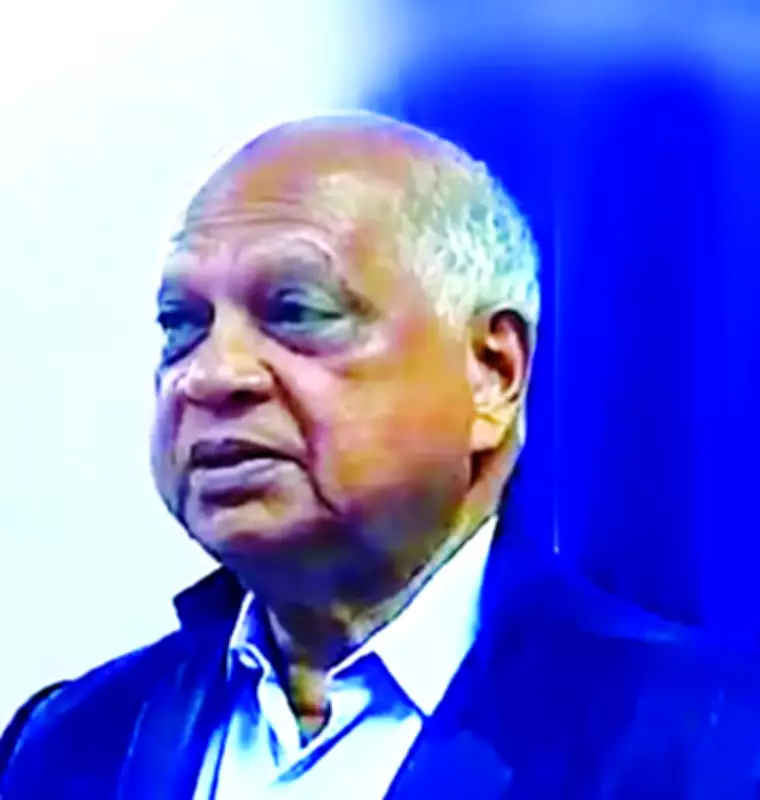
In a significant escalation of his grassroots campaign to safeguard Goa's ecological integrity, retired Allahabad High Court Chief Justice Ferdino Rebello addressed a substantial public gathering at Chandor on Friday. The event marked a pivotal moment in his expanding people's movement aimed at halting what he describes as indiscriminate land conversion laws threatening the state's natural heritage.
Core Demand: Comprehensive Carrying Capacity Studies for Every Village
Justice Rebello presented a detailed and urgent demand to the government, calling for immediate action on conducting carrying capacity assessments for each village across Goa. "We demand that the government carry out the carrying capacity study of every village," he declared emphatically to the attentive audience. He revealed a critical bureaucratic hurdle, noting that while an agency had been appointed for this crucial task, no financial resources had been allocated to enable its execution.
"The government must make provision in the next fiscal budget for adequate funds to conduct these essential carrying capacity studies," Justice Rebello insisted. He explained that these studies would serve as vital scientific tools to determine whether individual villages possess the infrastructure, resources, and environmental resilience to support large-scale housing projects without causing irreversible damage.

Strategic Importance of Capacity Assessments for Sustainable Development
Elaborating on the technical necessity of these studies, Justice Rebello emphasized that carrying capacity evaluations would provide objective data to guide development decisions. "The carrying capacity will help us determine if more housing projects in a village can be sustained or not," he stated. His position is unequivocal: no new development projects should receive approval without first establishing a village's specific capacity through rigorous scientific assessment.
This approach represents a fundamental shift toward evidence-based urban planning, moving away from what activists perceive as arbitrary permissions that disregard local environmental limits and community welfare.
Grassroots Mobilization and Political Accountability
Justice Rebello called for organized community action, urging citizens to form village-level committees to propel the movement forward. He directed a pointed challenge toward elected representatives, instructing people to confront their MLAs with a clear question: "Are you with us on these critical issues?"
He specified concrete legislative actions, demanding the immediate scrapping of sections 17(2), 39(A), and 17(A) of the Town and Country Planning Act. These provisions have been controversial in debates about land use regulations. "Tell your elected representatives to raise this demand in the legislative assembly," he instructed the gathering, adding a political ultimatum: "Either you stand with us to protect Goa, or remember that 2027 is approaching, and we will deliver our response through democratic means."
Context: The "Enough is Enough" Campaign Gains Momentum
The Chandor meeting represents a strategic chapter in Justice Rebello's ongoing "Enough is Enough" campaign, a sustained initiative focused on protecting Goa's delicate ecology and challenging what he characterizes as illegal permissions for land conversion and construction activities. This movement has been building momentum through systematic public engagement.
At a previous assembly in Margao, Justice Rebello announced plans to formally petition the Town and Country Planning (TCP) department, seeking an immediate halt to permissions for hill and slope cutting, as well as the filling of low-lying areas. He presented a legal argument, asserting that no valid rules have been in force under the Planning Act since 1997 to authorize the Town and Urban Planning department to grant such permissions, suggesting a regulatory vacuum being exploited.

The movement underscores growing public concern over unsustainable development patterns in Goa, positioning scientific assessment, legal accountability, and community mobilization as essential pillars for the state's sustainable future.