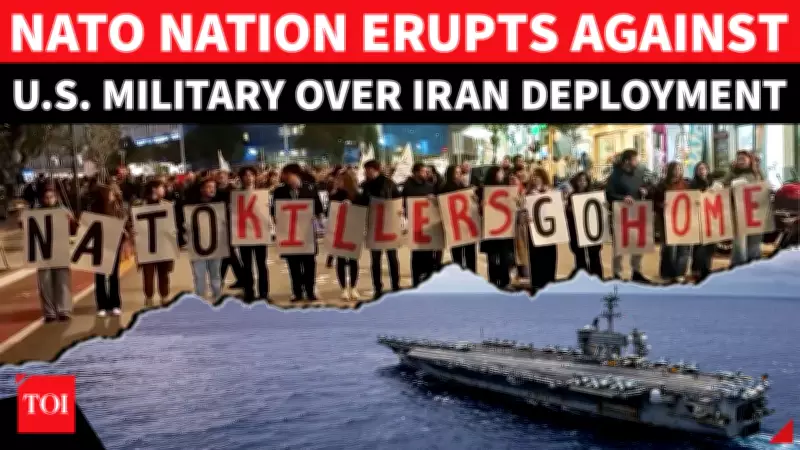
NATO Ally Greece Sees Protests Against US Carrier Amid Iran Tensions
Hundreds of demonstrators marched through the streets of Chania, Greece, on February 25, 2026, in a vocal protest against the arrival of the U.S. aircraft carrier USS Gerald R. Ford at the strategic Souda Bay naval base. The protest erupted amid escalating regional tensions with Iran, highlighting growing public discontent with military deployments in the area.
Protesters Denounce U.S. and NATO Military Presence
Chanting slogans and carrying banners that read "NATO Killers Go Home", the protesters accused the Greek government of supporting U.S. military operations. They demanded the immediate closure of the Souda Bay base, a key NATO facility in the eastern Mediterranean that plays a crucial role in regional security operations. The demonstration underscored local opposition to what many see as foreign military encroachment.
Strategic Implications Amid Rising Iran-U.S. Tensions
The protest comes at a critical time as the United States reportedly increases its military presence in the region, while Iran is said to be bolstering its defensive capabilities. This dual buildup has raised fears of a wider confrontation, with the eastern Mediterranean becoming a focal point for geopolitical maneuvering. The USS Gerald R. Ford's deployment is viewed as a significant show of force, intended to deter potential threats from Iran.
Greek Government's Role Under Scrutiny
Protesters specifically targeted the Greek government, criticizing its alignment with U.S. and NATO policies. They argued that hosting such military assets makes Greece complicit in actions that could lead to conflict. The Souda Bay base, due to its strategic location, is essential for NATO operations, making it a contentious issue in domestic Greek politics.
Broader Regional and Global Context
This incident reflects broader tensions within NATO, as member states balance alliance commitments with domestic public opinion. The protest in Greece signals potential challenges for NATO cohesion, especially as the alliance shifts its surveillance focus from Russia to Iran in response to Tehran's assertive posturing. The situation underscores the complex interplay between local activism and international security dynamics.
As tensions with Iran continue to simmer, such protests may become more frequent, testing the resolve of both the Greek government and NATO allies. The outcome could influence future military deployments and diplomatic strategies in the volatile eastern Mediterranean region.