

Gujarat Marriage Rule Amendments Trigger Heated Public Debate with 127 Submissions
Gandhinagar: The Gujarat government has received a significant 127 suggestions and objections from citizens and various organizations regarding proposed amendments to the Gujarat Registration of Marriages Rules. This substantial feedback highlights a sharp and profound divide over the contentious proposal to make parental intimation mandatory during the marriage registration process, as reported by Kapil Dave and Meghdoot Sharon.
Support for Stricter Provisions and Additional Measures
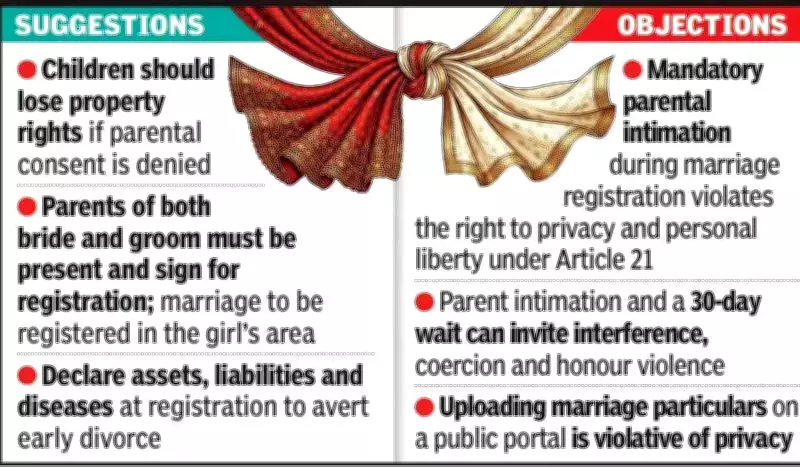
In the detailed feedback submitted after the draft rules were officially published, numerous respondents strongly backed stricter provisions, particularly in cases where marriages occur without explicit parental approval. Some supporters of the amendments proposed extremely tough measures, including the suggestion that children who marry against their parents' wishes should forfeit all rights over their parents' movable and immovable property. Another notable proposal called for the mandatory physical presence and signatures of both sets of parents at the precise time of registration.
Several respondents further advocated that marriages should be registered exclusively in the revenue jurisdiction of the girl's residence. Additional submissions sought expanded disclosures from couples, demanding declarations of financial assets and liabilities, as well as any infectious, congenital, or genetic diseases. Proponents argue such comprehensive measures could effectively help prevent early divorces and ensure greater transparency.

Some submissions also demanded stricter punishment in cases described as "love jihad" and suggested that religion-related documents should be sought instead of traditional caste certificates during the registration process.
Strong Objections Citing Privacy Violations and Safety Concerns
Conversely, the proposed amendments have drawn vigorous and passionate objections from many quarters. Several submissions argued forcefully that mandatory parental intimation during marriage registration constitutes a clear violation of fundamental rights to personal liberty and privacy under Article 21 of the Indian Constitution. Others expressed deep concern that uploading marriage details on a public portal would amount to a severe and unacceptable breach of privacy.
Some objections specifically noted that requiring Aadhaar or other identity details of parents would run directly contrary to established Supreme Court rulings. Numerous warnings were issued that informing parents and imposing a 30-day moratorium before registration could dangerously trigger false kidnapping complaints, unwarranted parental interference, severe coercion, and even honor-based violence against vulnerable couples.
Background and Government Statements on the Proposed Changes
The state government formally introduced the draft amendments on February 20 under the Gujarat Registration of Marriages Act, 2006. Under the current proposal, applicants would be required to submit a declaration stating explicitly whether the bride and groom have informed their parents about the marriage. The draft rules specify that ten days after the assistant registrar is satisfied with all submitted documents, parents of both parties would be informed physically or electronically by the government itself.
At the time of the announcement, Minister of State for Home Harsh Sanghavi stated that the move was intended to strengthen essential safeguards in the registration process. Referring to "love jihad" as a "cultural invasion," he emphasized that the government was firmly committed to acting against those who "bring disrepute to love."
Current Status and Future Implications
Government sources have clarified that no final decision has yet been taken on the extensive feedback because the model code of conduct for local body elections is currently in force. They also noted that the Uniform Civil Code Bill has not yet received Presidential assent. According to these sources, once the UCC eventually comes into force, provisions not covered under it will continue to operate under the existing Gujarat Registration of Marriages Act, ensuring a complex legal landscape moving forward.






