

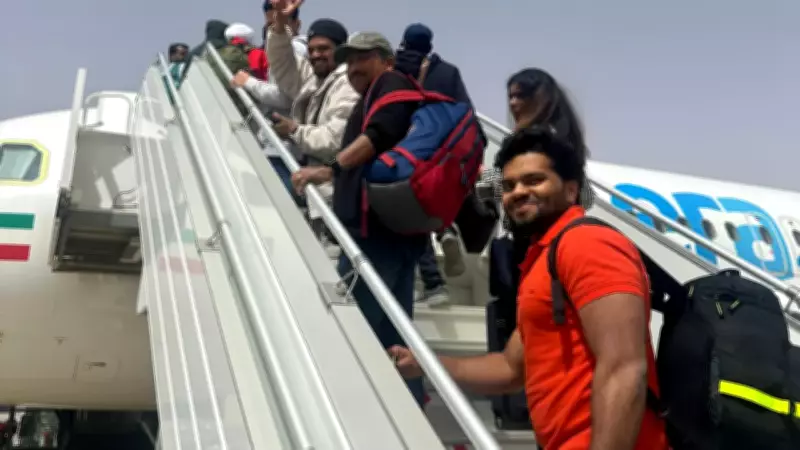
Gulf Airlines Forced to Reroute India Flights via Saudi Arabia Amid Escalating Israel-Iran Conflict
The ongoing war between Israel and Iran has severely disrupted air travel in the Middle East, compelling airlines from Gulf Cooperation Council (GCC) member states, such as Kuwait and Bahrain, to operate flights from neighboring Saudi Arabia. This emergency measure directly affects the substantial Indian diaspora residing in these Gulf nations, who rely on these air connections for travel and repatriation.
Jazeera Airways Implements Temporary Operations from Saudi Arabia
Kuwait's low-cost carrier, Jazeera Airways, has initiated a contingency plan by relocating all its India-bound flights to Saudi Arabia's Dammam airport, effective from Thursday. The airline anticipates restoring its pre-war schedule of 24 weekly flights to eight Indian cities by the first week of April. Barathan Pasupathi, the Indian-origin CEO of Jazeera Airways, detailed the complex travel logistics now in place.
"Our passengers from Kuwait undergo check-in at a temporary terminal established at the land border, complete with customs and immigration facilities. They then board protected buses to Saudi Arabia, where transit visas are issued and border formalities are cleared. From there, they proceed to Dammam or Qaisumah Airport in Hafar Al Batin to catch their flights. The process is reversed for return journeys," Pasupathi explained.

Expansion Plans and Long-Term Disruptions
In response to heightened travel demand, Jazeera Airways has requested temporary authorization from Indian authorities to operate flights to four additional cities: Kozhikode, Kannur, Tiruchirappali, and Mangalore. This move aims to accommodate the surge in passengers, especially since Jazeera remains the sole Kuwaiti carrier currently servicing India. The airline's existing routes cover eight Indian destinations, but the conflict has created an urgent need for expanded connectivity.
Pasupathi foresees that these alternate travel arrangements may persist for up to a year, even after the war concludes, due to extensive damage inflicted on regional infrastructure. On Wednesday morning, a fuel tank at Kuwait International Airport was severely damaged by Iranian missiles, exacerbating the aviation crisis. Kuwait, with a population of 50 lakh, includes over 10 lakh individuals of Indian origin, highlighting the critical nature of these flight operations.
Broader Impact on GCC Aviation and Indian Diaspora
The aviation landscape across the GCC has been profoundly altered by the conflict. Since February 28, civilian flights to and from Kuwait have been suspended, with Jazeera Airways commencing operations from Saudi Arabia's Qaisumah airport on March 11 and resuming India flights to Kochi by March 20. Other carriers, including IndiGo, Air India Express, and Akasa, which previously served Kuwait, have halted operations following the closure of Kuwaiti and Bahraini airspace.
Currently, only Saudi Arabia and Oman maintain regular flight schedules within the GCC, while the UAE permits limited flights from cities like Dubai, Abu Dhabi, and Fujairah based on situational assessments. Qatar has recently initiated some repatriation flights via Qatar Airways, but overall connectivity remains constrained.
Pasupathi emphasized the pivotal role of diplomatic support in facilitating this emergency setup. "We are grateful to Indian Ambassador to Kuwait Paramita Tripathi and the Indian DGCA for their swift assistance in securing clearances for this special arrangement. Their timely intervention has enabled thousands of Indians to travel safely during this crisis," he stated.
The Israel-Iran conflict continues to reshape travel dynamics in the Middle East, with Gulf airlines adapting to ensure mobility for the region's large Indian community amidst ongoing hostilities and infrastructural challenges.






