Gurgaon MCG Councillor's Husband Faces FIR for Casteist Abuse Against Sanitation Workers
In a significant development in Gurgaon, an FIR was officially registered on Wednesday against Prashant Bhardwaj, the husband of Municipal Corporation of Gurgaon (MCG) Ward 33 councillor Sarika Bhardwaj. The case involves serious allegations of criminal intimidation and the use of casteist slurs directed at sanitation workers, leading to widespread protests and a strike by the municipal staff.
Alleged Incident and Immediate Fallout
The alleged abusive incident occurred on Monday, when Prashant Bhardwaj reportedly confronted MCG sanitation employees who were engaged in cleaning duties. According to the FIR filed at the Sector-9A police station, the dispute began when Bhardwaj raised the issue of changing a sewer line at Lakshman Vihar-2. The sanitation staff clarified that this responsibility fell under the contractor's purview, but Bhardwaj insisted that the MCG workers should handle the task.
The situation escalated rapidly, with the FIR alleging that Bhardwaj used derogatory language and caste-based slurs against the workers. He is accused of threatening them with severe harm, including warnings that they would be killed or seriously injured. Additionally, Bhardwaj allegedly stated that he would be forced to pick up a stick if the workers did not comply with his directions, creating an atmosphere of fear and intimidation.

Complaint and Union Involvement
The complainant, Dharmender Jhingala, further alleged that Bhardwaj threatened to circulate videos on social media to exert pressure on the staff and amplify their fear. Following the incident, the sanitation workers reported the matter to the Municipal Employees Union, which promptly escalated it to the MCG authorities. A written complaint was subsequently submitted to the police, leading to the registration of the FIR.
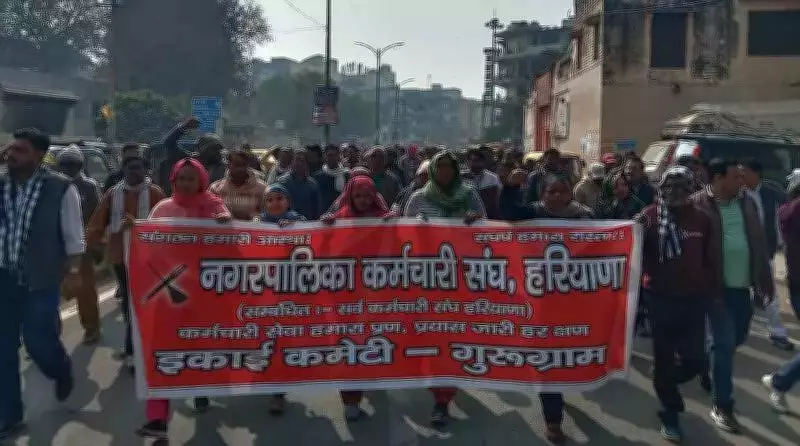
In protest, sanitation staff staged a sit-in at the old MCG office, demanding the immediate arrest of Prashant Bhardwaj. Basant Kumar, the chief of the Municipal Employees Union, emphasized the gravity of the situation, describing it as a serious criminal offence. He stated, "After sustained protests, the FIR has now been registered. We have called a meeting of the union on Thursday and will decide whether to call off the strike."
Official Response and Denial
MCG additional commissioner Ravinder Yadav expressed hope that the agitation would subside following the registration of the FIR, indicating a potential resolution to the ongoing strike. However, Prashant Bhardwaj has vehemently denied all allegations against him. He claimed that on February 2, only three out of eight deployed sanitation workers had reported for duty, prompting him to meet with the supervisor.
Bhardwaj alleged, "The supervisor told me that they were working somewhere else and offered me a bribe of Rs 1 lakh to keep the arrangement running." He further asserted that he did not use any caste-based words and mentioned having a video recording to support his version of events.
Legal Charges and Broader Implications
The FIR invokes serious charges under multiple sections of the law, including:
- Sections 3(1)(r) and 3(1)(s) of the Scheduled Castes and Scheduled Tribes (Prevention of Atrocities) Act.
- Section 121(1) for criminal intimidation.
- Section 3(5) for common intention.
- Section 351(2) for criminal intimidation involving threats of serious harm under the Bharatiya Nyaya Sanhita (BNS).
This case highlights ongoing issues of caste-based discrimination and worker rights in urban municipal settings, particularly in rapidly developing cities like Gurgaon. The involvement of a councillor's family member adds a layer of political sensitivity, potentially impacting local governance and public trust in municipal authorities.
The incident has sparked a broader conversation about the treatment of sanitation workers, who are often from marginalized communities, and the enforcement of laws designed to protect them from atrocities. As the legal process unfolds, all eyes will be on how the authorities handle this case, which could set a precedent for addressing similar incidents in the future.