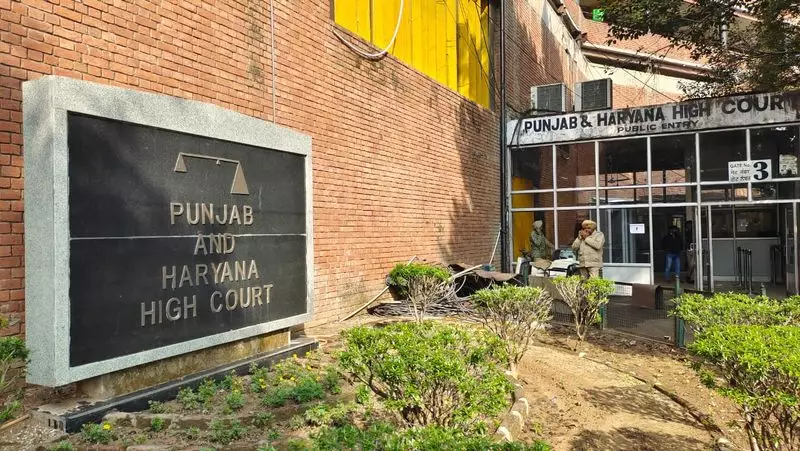
In a significant ruling that underscores the principle of reformation in criminal justice, the Punjab and Haryana High Court has substantially reduced the prison sentence of a convict involved in a decade-old subsidy fraud case. The court's decision pivots on the belief that the objective of sentencing should be rehabilitation, not merely retribution.
The Case and the Original Conviction
The legal proceedings stem from an incident reported in 2012 at the Model Town police station in Panipat district. The convict, Ravinder Kumar, was found guilty of fraudulently obtaining a subsidy intended for the purchase of a tractor. According to the prosecution, Kumar managed to acquire this financial benefit by submitting forged documents to the authorities.
Following a trial, the judicial magistrate first class in Panipat convicted Ravinder Kumar in April 2016. The court sentenced him to three years of rigorous imprisonment and also imposed a fine. Dissatisfied with this verdict, Kumar appealed to the sessions court in Panipat. However, in July 2017, the sessions court dismissed his appeal, upholding both the conviction and the sentence passed by the lower court.

The High Court's Grounds for Sentence Reduction
Ravinder Kumar then approached the Punjab and Haryana High Court with a revision petition challenging the sentence. The bench, hearing the petition, delved into several critical aspects of the case. The court noted that the offence took place over ten years ago and that the convict had been facing the protracted legal process since then.
A pivotal factor in the court's decision was the absence of any prior criminal record against Ravinder Kumar. The judges observed that he was not a habitual offender. Most importantly, the High Court emphasized the reformative theory of punishment. It stated that the goal of sentencing should be to reintegrate the offender into society as a law-abiding citizen, rather than focusing solely on punitive measures.
The court also considered the fact that the convict had already undergone a part of the incarceration and had been granted bail during the pendency of his appeal. Balancing all these circumstances, the High Court found the three-year sentence to be excessive for the purpose of reformation.
The Modified Sentence and Key Takeaways
Exercising its revisionary powers, the Punjab and Haryana High Court decided to modify the sentence. The bench reduced the term of rigorous imprisonment from three years to one year. The court, however, did not interfere with the fine amount that was originally imposed by the trial court.
This judgment brings to the fore several important facets of the Indian legal system. It reiterates that the courts can exercise discretion in sentencing based on the specifics of each case, including the nature of the offence, the time elapsed, and the background of the accused. The ruling strongly advocates for a humanitarian approach within the criminal justice framework, suggesting that for first-time offenders in certain types of crimes, reform can be a more constructive outcome than long-term imprisonment.
The decision is likely to be cited in similar future cases where the age of the case and the profile of the convict call for a lenient view aligned with the objective of rehabilitation. It serves as a reminder that justice encompasses not just punishment but also the potential for redemption and societal reintegration.