

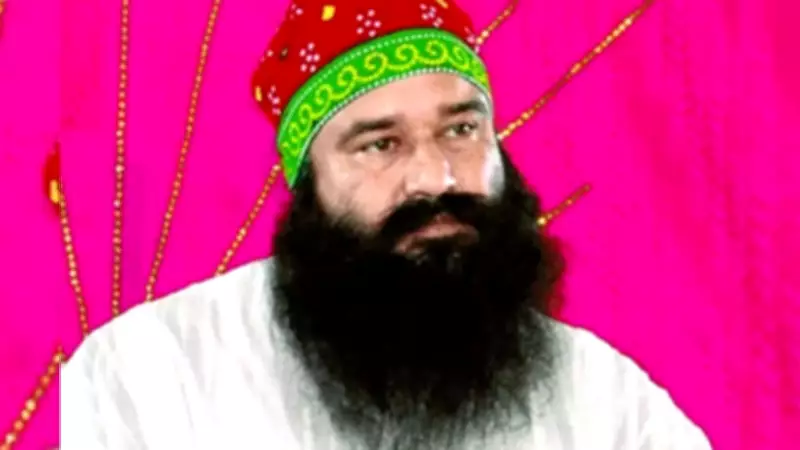
High Court Overturns Life Sentence for Dera Chief in Journalist Murder Case
The Punjab and Haryana High Court delivered a significant verdict on Saturday, acquitting the incarcerated Dera Sacha Sauda chief, Gurmeet Ram Rahim, in the 2002 murder case of journalist Ram Chander Chhatrapati. This decision overturns a life sentence previously awarded by a Central Bureau of Investigation (CBI) court, marking a substantial setback for the investigating agency.
Legal Proceedings and Current Incarceration
Gurmeet Ram Rahim remains confined in Sunaria jail, Rohtak, where he is serving a 20-year sentence imposed in August 2017 following his conviction for raping two women devotees. He has already spent over eight years in prison for that offense. Despite this acquittal, his legal troubles persist, as he faces a separate CBI case concerning the alleged castration of some Dera followers, with the trial pending in a Panchkula court.
This is not the first acquittal for the Dera chief in a murder case; the High Court had previously cleared him in the murder of former Dera manager Ranjit Singh. In the latest ruling, the court allowed Gurmeet's appeal against his conviction in the Chhatrapati murder case while simultaneously upholding the life sentences of three co-accused individuals.

Background of the Case and Family's Response
Ram Chander Chhatrapati served as the editor of the evening newspaper Poora Sach. He had published investigative reports alleging sexual exploitation of women disciples within Dera Sacha Sauda. The prosecution contended that his killing was a retaliatory act for this critical coverage. Following the High Court's decision, Anshul, the slain journalist's son, announced that the family intends to challenge the acquittal by appealing to the Supreme Court, seeking justice for their father.
Defense Arguments and CBI Allegations
A special CBI court had sentenced Gurmeet Ram Rahim and three others to life imprisonment in 2019, along with imposing a fine of 50,000 rupees each. Gurmeet contested this conviction in the High Court, asserting that he was wrongfully accused. His legal counsel presented several key arguments during the appeal.
Allegations of CBI Torture and Revenge: The defense claimed that Krishan Lal, a co-accused, was subjected to torture by the CBI. They argued that Gurmeet's name was subsequently included as an accused party out of revenge, suggesting misconduct in the investigation process.
Questioning of Key Witness Testimony: Lawyers scrutinized the testimony of key witness Khatta Singh, pointing out that his claim about a conspiracy being hatched in his presence, which he did not disclose to anyone, was contradicted by admissions from Investigating Officer M. Narayanan during cross-examination. This raised doubts about the reliability of the evidence presented by the prosecution.
Lack of Proven Grievance: The defense further argued that the prosecution failed to demonstrate any grievance Gurmeet held against the journalist. They emphasized that the investigating agency could not provide even minimal evidence to prove that Gurmeet had ever read Poora Sach, noting that the evening paper primarily reproduced reports already published by morning newspapers, thereby weakening the motive for retaliation.
This acquittal adds a new chapter to the complex legal saga surrounding Gurmeet Ram Rahim, highlighting ongoing debates over judicial processes and investigative integrity in high-profile cases.






