

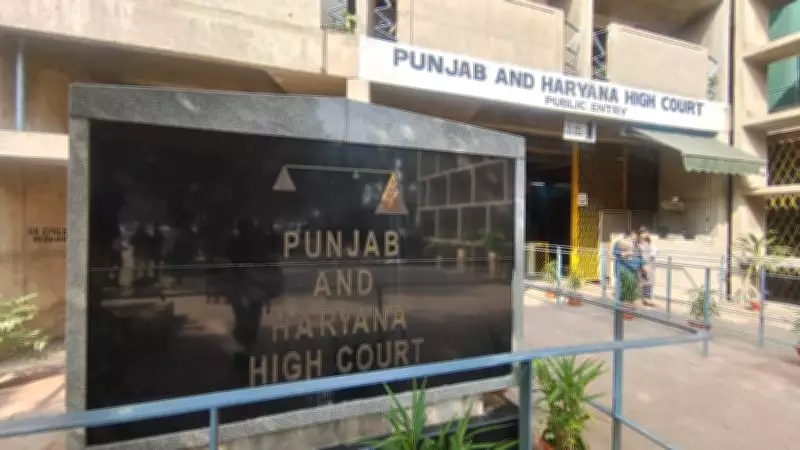
In a significant judgment, the Punjab and Haryana High Court has acquitted a man convicted under the Narcotic Drugs and Psychotropic Substances (NDPS) Act, 24 years after his initial arrest. The court found that the seizure memo had been tampered with, noting overwriting and the use of a different ink, which raised serious doubts about the integrity of the evidence.
Case Background
The convict, identified as Gurdev Singh, was arrested in 2000 for allegedly possessing 2 kg of opium. He was convicted by a trial court in 2002 and sentenced to 10 years of rigorous imprisonment. The case reached the High Court after multiple appeals.
Key Findings
Justice Sureshwar Thakur, presiding over the case, observed that the seizure memo showed clear signs of tampering. The white fluid used to overwrite certain details and the different ink used for subsequent entries indicated that the document was not prepared at the time of seizure but later manipulated.

- The overwriting was done with white fluid, a common office correction tool, but was not initialed by any witness or officer.
- The ink used for the overwritten portions differed from the original entries.
- No explanation was provided by the prosecution for these discrepancies.
The court emphasized that the credibility of the seizure memo is paramount in NDPS cases, as it forms the basis of the prosecution's case. Any tampering with such a document undermines the entire case.
Legal Precedents
The High Court relied on several Supreme Court judgments that underscore the importance of maintaining the sanctity of seizure memos. In cases where the memo is found to be tainted, the benefit of doubt must go to the accused.
Justice Thakur noted, "The overwriting and different ink create a reasonable doubt about the authenticity of the seizure. The prosecution has failed to prove its case beyond a reasonable doubt."
Impact on the Convict
Gurdev Singh, who has already served over 10 years in prison, was released immediately after the judgment. His family expressed relief and gratitude towards the court for recognizing the flaws in the evidence.
This case highlights the systemic issues in the handling of evidence in NDPS cases, where procedural lapses often lead to wrongful convictions. The judgment serves as a reminder to law enforcement agencies to adhere strictly to protocols.
Reactions
Legal experts have hailed the verdict as a victory for justice. Advocate Harpreet Singh, who represented the convict, said, "This judgment reaffirms that courts will not tolerate any manipulation of evidence. It is a landmark decision for NDPS cases."
However, some prosecutors expressed concern that such acquittals might embolden drug traffickers. The court, in its order, clarified that the acquittal was based on the specific facts of the case and not a blanket exoneration.
The Punjab and Haryana High Court's decision is expected to set a precedent for similar cases where the integrity of seizure memos is questioned.






