

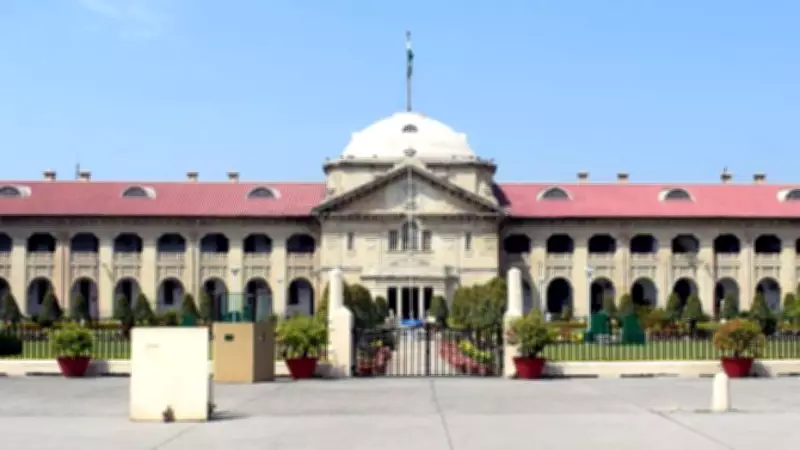
Allahabad High Court Upholds Rights of Legal Heirs in Medical Reimbursement Cases
The Lucknow bench of the Allahabad High Court delivered a landmark verdict on Saturday, affirming that legal heirs of government employees or pensioners are entitled to claim reimbursement of medical expenses if the beneficiary dies during treatment or becomes incapable of filing the claim. This ruling addresses a critical gap in existing regulations and ensures that families are not left financially burdened in such distressing circumstances.
Case Background and Petitioner's Struggle
The judgment came during the hearing of a petition filed by Chandra Choor Singh, whose father, a retired deputy registrar, underwent treatment at private hospitals in Lucknow and passed away during the course of treatment. Following his father's death, Singh applied for reimbursement of the medical expenses incurred. However, the department rejected the claim, citing that only the "beneficiary" is eligible to apply under the Uttar Pradesh Government Servants (Medical Attendance) Rules, 2011. The state government argued that Singh did not fall within this category and also pointed to a Rs 5,000 limit mentioned in the succession certificate submitted by the petitioner.
Court's Rejection of State's Arguments
The bench, comprising Justices Alok Mathur and Amitabh Kumar Rai, firmly rejected the state's contentions. The court observed that the provisions of Rule 16 of the 2011 Rules were arbitrary and in violation of Article 14 of the Constitution, which guarantees equality before the law. It held that legal heirs cannot be denied the right to claim reimbursement if the beneficiary has died or is unable to do so, emphasizing that such a denial would be unjust and discriminatory.

Principle of "Reading Down" Applied
Invoking the principle of "reading down," the court directed that Rule 16 be interpreted in a manner that includes legal heirs, particularly in cases where no other eligible beneficiary exists. This interpretation ensures that the rule aligns with constitutional principles and provides relief to families in need. The bench further clarified that in the absence of any dispute regarding legal heirship, claims should not be rejected on mere technical grounds, promoting a more humane and practical approach to administrative procedures.
Directions for Timely Action
The court issued specific directives to the concerned authorities, ordering them to reconsider the petitioner's application within two months. If the claim is found to be valid, the reimbursement must be processed within one month thereafter. This timeline aims to prevent unnecessary delays and ensure that affected families receive timely financial support, thereby alleviating some of the stress associated with medical emergencies and loss.
This ruling sets a significant precedent for similar cases across Uttar Pradesh and potentially other states, reinforcing the rights of legal heirs in matters of medical reimbursement and highlighting the judiciary's role in safeguarding constitutional values against arbitrary administrative rules.






