

Calcutta High Court Approves Surrogacy for Darjeeling Couple Despite Age Barrier
The Jalpaiguri Circuit Bench of the Calcutta High Court has made a landmark decision by allowing a Darjeeling couple in their 50s to opt for surrogacy. This ruling comes after considering the profound emotional pain endured by the couple in their quest to become parents and the successful cryopreservation of embryos, which offers a promising chance for a successful pregnancy.
A Journey Marred by Setbacks and Delays
In March 2019, the couple embarked on a heartfelt mission to become biological parents. However, their hopes were dashed when the woman suffered two miscarriages due to poor ovarian reserve. Medical experts then advised them to proceed with the second phase of Assisted Reproductive Technology (ART) treatment through gestational surrogacy. This procedure involves creating an embryo in a laboratory using a donor egg and transferring it to a surrogate's uterus.
Just as the couple mentally prepared to start this new journey, the Covid-19 pandemic struck, causing significant delays and further complicating their plans. Represented by advocate Achin Jana, the couple appealed to the High Court, pleading for an opportunity to become parents despite these obstacles.

Age Limit Challenges and Legal Hurdles
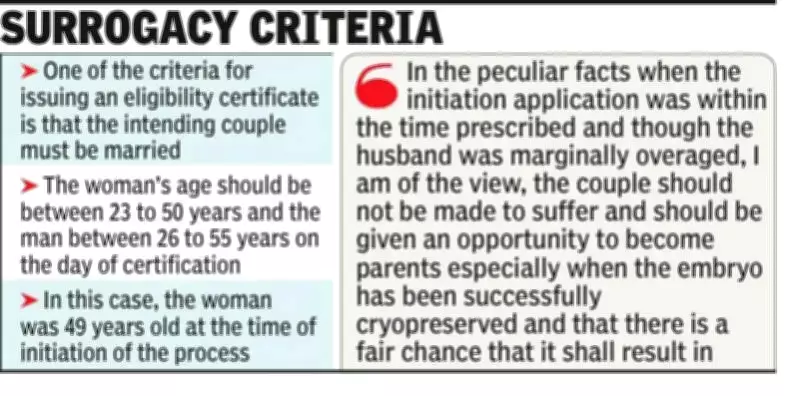
The couple faced a critical legal hurdle related to age restrictions. According to the criteria for issuing an eligibility certificate for surrogacy, the intending couple must be married, with the female aged between 23 and 50 years and the male between 26 and 55 years on the day of certification. Data from the centre indicates that the average age of menopause for females in India is 46.2 years.
In this case, the wife applied for a certificate of medical indication when she was 49 years old, which was within the prescribed age limit. However, by the time she sought the eligibility certificate, her age had increased to above 50 in 2026, leading to denial on grounds of being overaged. The husband's age was 56 years at this stage.
Court's Compassionate Ruling Based on Unique Circumstances
Justice Raja Basu Chowdhury, in his order, acknowledged the slight overage but emphasized the unique circumstances of the case. He noted that after receiving initial permission from the authorities, the ovum was successfully retrieved, and the embryos were cryopreserved in December 2025. All that remained was the transfer of these embryos to a surrogate's uterus.
Justice Basu Chowdhury stated, "In the peculiar facts when the initiation application was within the time prescribed and though the husband was marginally overaged, I am of the view, the couple should not be made to suffer and should be given an opportunity to become parents especially when the embryo has been successfully cryopreserved and that there is a fair chance that it shall result in successful pregnancy." This compassionate ruling grants the aged couple a renewed chance to fulfill their dream of parenthood.
The decision highlights the judiciary's flexibility in interpreting regulations to address human suffering and medical advancements, setting a precedent for similar cases in the future.






