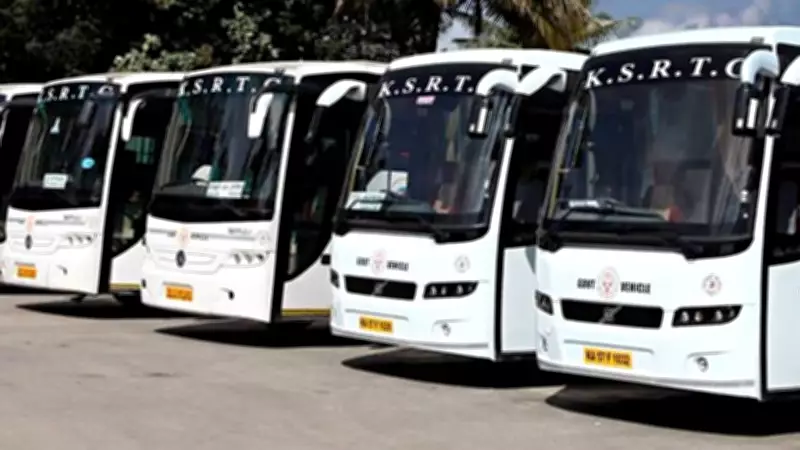
Karnataka High Court Mandates NWKRTC to Formulate Employee Transfer Guidelines Within 90 Days
The Karnataka High Court has issued a significant directive to the North Western Karnataka Road Transport Corporation (NWKRTC), ordering the public transport body to develop and implement comprehensive guidelines for employee transfers within a strict three-month timeframe. This judicial intervention underscores the critical importance of structured transfer policies in public sector administration.
Court Emphasizes Transparency and Fairness in Administrative Transfers
In a landmark order dated January 23, Justice Lalitha Kanneganti articulated that transfer guidelines serve as a vital administrative tool for ensuring efficiency, integrity, and smooth institutional functioning. The bench explicitly stated, "The transfer guidelines provide a structured framework that ensures fairness and transparency in decision making. The scope of arbitrariness is significantly reduced. Employees gain confidence that transfers are not punitive or discretionary but are based on rational considerations."
The court further elaborated that the absence of uniform standards can lead to employee dissatisfaction and allegations of malafide intentions. Therefore, the formulation and strict adherence to transfer guidelines are deemed a necessity rather than a mere administrative formality.

Case Background: Driver-Conductor Challenges Transfer Order
The court's direction emerged from a petition filed by Chandrakanth Y Toravi, a bus driver-cum-conductor employed by NWKRTC. Toravi had legally contested his transfer order issued on November 30, 2024, which relocated him from the Chikodi depot to the Belagavi/Khanapur division on administrative grounds.
Advocate Raghuveer R Sattigeri, representing the petitioner, argued that the corporation transferred Toravi without any substantive basis. In response, NWKRTC contended that it possessed the authority to effect transfers on administrative grounds and noted that Toravi had already resumed duties at the new location, rendering the petition infructuous.
Judicial Findings and Rationale
The bench meticulously examined the circumstances and discovered a notable discrepancy. While 43 other employees had been transferred based on their own requests, Toravi was transferred despite not having made any such request. The court observed, "Even assuming that there is an administrative reason behind his transfer, the transfer order should contain the reasons and the petitioner cannot be singled out. Except the petitioner, no other employee is transferred on administrative grounds."
Rejecting NWKRTC's argument that the petition was not maintainable, the court affirmed Toravi's right to challenge the action, noting that as an employee, he had no alternative but to comply with the transfer initially. The bench declared the transfer order against Toravi as arbitrary and baseless, thereby allowing his petition.
Interim Measures and Broader Implications
Pending the establishment of formal transfer guidelines, the court imposed an interim requirement: any administrative transfer must include explicit reasons and constitute a "speaking order." This measure aims to prevent arbitrariness during the transitional period.
The judgment reinforces that while employers retain the power to transfer employees, its exercise must be governed by well-defined norms to prevent arbitrariness. The court concluded, "The transfer guidelines are very much essential for a fair, transparent, and efficient administration." This ruling is expected to influence administrative practices across public sector corporations in Karnataka, promoting greater accountability and employee welfare.