

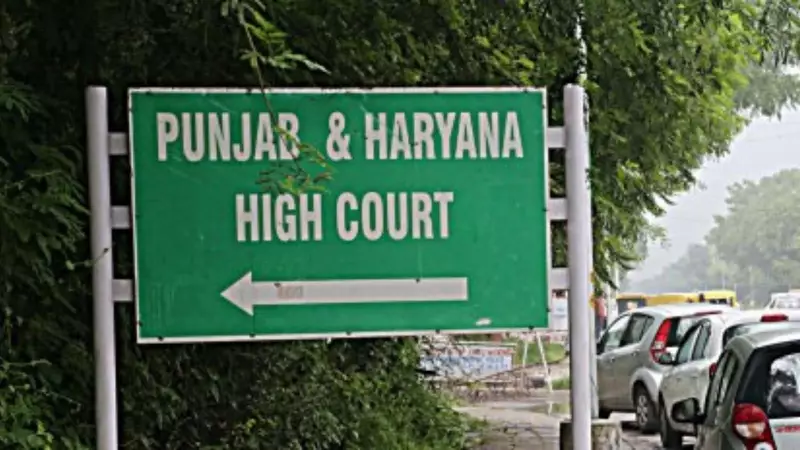
The Punjab and Haryana High Court has directed a meticulous, time-bound approach to appointing a consultant for a major redevelopment project of its premises in Chandigarh. The court's primary aim is to circumvent procedural delays that could jeopardize the ambitious plan, which now faces a firm deadline of January 21, 2026.
Bench Flags Financial Rules, Seeks Parallel Tender Process
During a hearing on Monday, a division bench comprising Chief Justice Sheel Nagu and Justice Sanjiv Berry scrutinized the appointment procedure. The discussion was prompted by the Chandigarh Union Territory administration, which highlighted a critical financial threshold. Senior advocate Amit Jhanji, representing the administration, informed the court that the consultancy fee for the holistic development plan is likely to exceed Rs 50 lakh.
This figure is significant because, under the General Financial Rules (GFR) 2017, any consultancy costing above Rs 50 lakh mandates a transparent tendering process. Jhanji explained that while a single-source selection is permissible for smaller sums, crossing this limit legally obligates the administration to invite Expressions of Interest (EoI).

"To avoid further delay, it may be appropriate to initiate the tendering process in parallel, since we now have time till January 21," Jhanji submitted. He proposed that an EoI could be floated within 10–15 days to keep the process on track.
Legal Experts Warn Against Procedural Shortcuts
The court received strong counsel against taking any shortcuts. Additional Solicitor-General of India Satya Pal Jain emphasized that a single-source appointment at this stage could be legally challenged later, leading to significant setbacks. He warned that such a move might be contested on grounds of lack of transparency or non-consideration of other candidates.
"Otherwise, somebody will come and say why this person was chosen and what the criteria was," Jain remarked, recalling that the tender route had been suggested in earlier hearings as well.
Senior advocate Rupinder Khosla, representing the Bar Association, supported the court's cautious stance. He noted that considerable time had already been lost over the past year and argued that a proper, albeit expedited, tender process would shield the final decision from future legal challenges.
Roadmap for a Time-Bound Appointment
Providing a clear roadmap, Jhanji assured the bench that once the high court or its committee formally defines the scope of work, the UT administration can act swiftly. He outlined a potential timeline:
- Publish a Request for Proposal (RFP) within two days of receiving the scope.
- Allow a 10-day window for consultants to submit their bids.
- Complete technical and financial evaluations within two more days.
This schedule, he contended, would allow the contract to be finalized well before the January 21, 2026, deadline. The bench, however, sought clarity on whether the scope of work would be defined by the court or its committee. Chief Justice Nagu underscored that the final execution must rest with the UT administration to prevent future objections about excluding stakeholders.
"Let us not derail a process that has reached the final stage. The intention is to expedite, but without committing any mistake," Chief Justice Sheel Nagu cautioned.
The matter has been scheduled for further hearing on January 9, 2026, following the winter recess. The court is expected to issue specific directions on the scope of work and the final modality for appointing the consultant at that time.






