Bombay High Court Takes Action on Lonar Lake Water Crisis
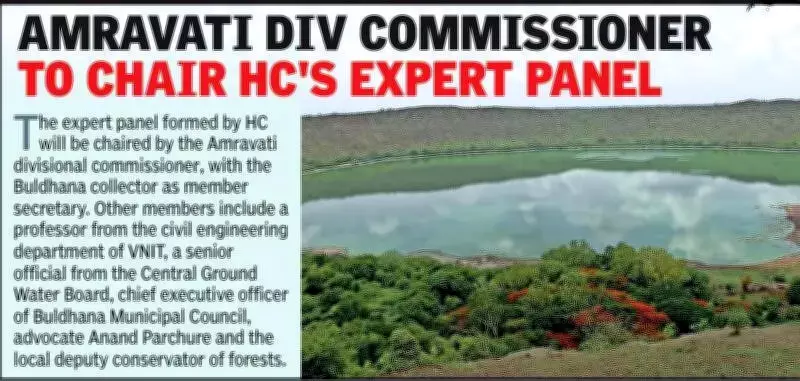
The Nagpur bench of the Bombay High Court has taken a decisive step by constituting a multi-member committee to examine and recommend urgent measures to address the steadily rising water levels at Lonar Lake. This judicial intervention highlights growing concerns over ecological threats and administrative lapses in managing this unique geological site.
Judicial Concern Over Environmental Impact
Acting on suo motu cognisance of media reports, the court noted that water levels in the crater lake have been continuously rising since the last monsoon season. The increase is attributed to inflows from multiple springs and at least four identified sources, leading to the submergence of nearby temples and raising significant heritage and environmental concerns.
During the hearing, the bench expressed frustration that despite earlier notices to various state departments, no satisfactory action plan had been presented. The court directed the formation of a committee to conduct a detailed study and propose remedial steps based on recommendations from amicus curiae Mohit Khajanchi.

Composition and Mandate of the Committee
The newly formed panel will be chaired ex officio by the Amravati divisional commissioner, with the Buldhana collector serving as member secretary. Other committee members include:
- A professor from the civil engineering department of Visvesvaraya National Institute of Technology
- A senior official from the Central Ground Water Board
- The chief executive officer of Buldhana Municipal Council
- Advocate Anand Parchure
- The local deputy conservator of forests
The court has directed the committee to convene within 15 days, undertake an immediate site visit, and submit a comprehensive report. The matter has been scheduled for further hearing on May 6, 2024.
Sharp Criticism of Administrative Oversight
In a pointed observation regarding administrative oversight, the court questioned whether authorities were adequately aware of the escalating situation. The bench orally asked, "Are the divisional commissioner and collector unaware of the rising water level?" and sought detailed records of meetings conducted over the past year to address the issue.
"What has the divisional commissioner done," the bench further inquired, directing that this question be formally placed on record. This judicial scrutiny underscores concerns about governance gaps in responding to environmental challenges.
Broader Context and Implications
The Lonar Lake issue intersects with a pending petition before the principal seat of the Bombay High Court concerning the conservation and development of this globally important geological formation. This latest judicial intervention emphasizes the need for coordinated governance and scientific assessment as climate variability and hydrological changes increasingly impact fragile ecosystems.
The formation of this committee represents a significant step toward addressing both immediate threats and long-term conservation needs for one of Maharashtra's most unique natural landmarks.