

India's Muslim Community Displays Rare Unity in Mourning Ayatollah Khamenei
The recent death of Iran's 86-year-old Supreme Leader Ayatollah Ali Khamenei during a US-Israel military strike in Tehran has triggered an extraordinary response across India's diverse Muslim population. In cities including Lucknow, Hyderabad, Mumbai, and Aligarh, condolence gatherings, funeral prayers in absentia, and widespread online tributes indicate a significant moment where both Shia and Sunni communities appear to be grieving the same leader despite centuries of theological separation.
Crossing Sectarian Boundaries
Ayatollah Khamenei, who assumed leadership of Iran in 1989 following the death of Ayatollah Ruhollah Khomeini, was fundamentally a Shia cleric with no formal religious authority over Sunni Muslims. Yet the emotional reactions to his violent death have clearly transcended traditional sectarian divisions. For many Sunni Muslims across South Asia, the profound response has less to do with Iran specifically and more with the Palestinian cause—an issue that consistently bridges sectarian gaps throughout the region.
"Iran's leader commanded respect even among Sunni circles because he spoke with clarity and consistency regarding Palestine," explained Mufti Ahmad Khan, a prominent cleric based in Okhla. "For countless Muslims, the Palestinian struggle carries greater weight than sectarian identity."

Political Conviction and Religious Authority
Syed Sadatullah Husaini, chief of Jamaat-e-Islami Hind, emphasized that Khamenei's life embodied political conviction alongside religious leadership. An official statement noted that his "martyrdom during the sacred month of Ramadan has profoundly saddened millions throughout the Muslim world."
Among certain Sunni religious leaders, expressions of grief have been accompanied by criticism toward Muslim-majority governments perceived as remaining silent. Imam Khumair, a cleric from Ghaziabad, remarked that it was the leader of the world's only Shia-majority nation who "stood his ground firmly and ultimately paid with his life."
Widespread Mourning and Symbolic Gestures
Protests and condolence meetings have been organized extensively across Shia communities—from Jammu and Kashmir and Ladakh to Lucknow, Aligarh, Hyderabad, Mumbai, and Delhi. In numerous neighborhoods, black flags were raised outside imambaras, a symbolic gesture typically reserved for mourning events connected to Karbala or the passing of senior clerics.
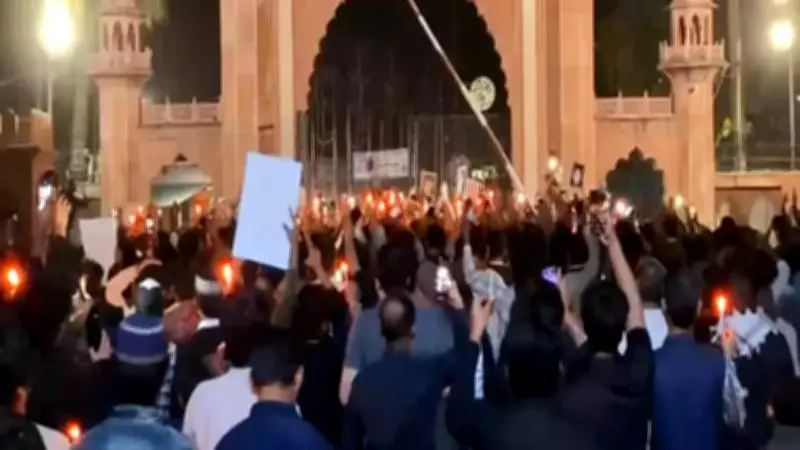
In Lucknow specifically, Shia-led gatherings witnessed active Sunni participation, with circulating videos showing large crowds chanting solidarity slogans. For many Shia adherents, the language describing Khamenei's death drew direct parallels to Karbala, the defining historical event in Shia consciousness.
"The Ayatollah was not merely a leader for Shias alone," stated SM Tahir Husain, a Shia community activist. "Muslims frequently overlook sectarian boundaries during moments of collective significance."
Academic and Student Responses
At Aligarh Muslim University, students conducted funeral prayers in absentia to honor the deceased leader. Scholar Basharat Ali observed that within Shia political imagination, martyrdom often transforms into a powerful source of unity and political resilience.
For many Shia Muslims in India, Iran holds deep religious importance as the globe's largest Shia-majority country and home to vital clerical centers such as Qom and Mashhad. Conversely, Sunni responses have been predominantly political in nature, framed around Palestinian solidarity and opposition to Israeli actions.
This unprecedented display of cross-sectarian mourning highlights how geopolitical events and shared causes can momentarily bridge historical divides within India's complex religious landscape.






