

Indore Fire Tragedy Reignites Critical Safety Debate Over Electronic Locks
As the smoke cleared from the devastating Brijeshwari Annexe inferno on Wednesday, a chilling and familiar question resurfaced across Indore: Did modern security technology transform a family home into an inescapable death trap? This latest tragedy has powerfully reignited the urgent debate surrounding the safety of electronic and digital locking systems during fire emergencies, eerily mirroring a similar fatal incident involving a local businessman and Congress leader that occurred just months earlier in the same city.
Conflicting Accounts Emerge in Aftermath of Blaze
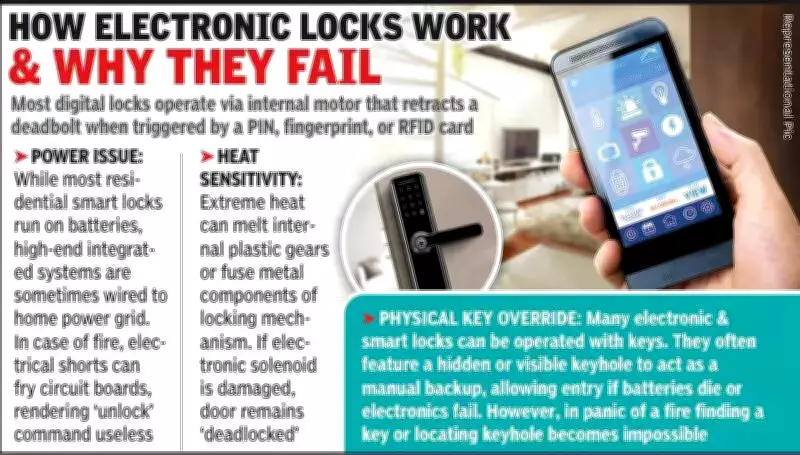
Initial briefings from senior police officials pointed directly toward a catastrophic technological failure. "The fire originated from a short circuit at an electric vehicle charging point," Police Commissioner Santosh Kumar Singh told gathered media. "The residence was equipped with electronic locks, which reportedly failed to operate after the electrical power was severed." Commissioner Singh emphasized that this failure of the digital security system, combined with subsequent explosions from cooking gas cylinders, tragically eliminated any viable exit route for the victims trapped inside.
However, this official narrative was immediately challenged by Soni Mhatre, who has served as the Pugalia family's domestic helper for an uninterrupted fifteen years. "I have personally seen the keys to the locks in this house," Mhatre insisted firmly. "The relatives had only just arrived yesterday, on Tuesday, for medical treatment. There were absolutely no electronic locks installed here; every single door in this home operates exclusively with traditional physical keys." This stark contradiction has introduced significant confusion into the ongoing investigation.

Forensic Investigation Seeks to Unlock the Truth
Deputy Commissioner of Police Kumar Prateek addressed the media, confirming that a specialized team from the Forensic Science Laboratory (FSL) is currently conducting a meticulous examination of the charred remains of the door assemblies recovered from the scene. "Determining whether the house was actually fitted with electronic locks, or if conventional manual locks became heat-fused and inoperable due to the intense temperatures, remains a matter of intensive and priority investigation," DCP Prateek stated, highlighting the technical complexities involved.
A Disturbing Pattern of Digital Security Failures in Indore
This tragic event is not an isolated case where digital security mechanisms have been implicated in a fatal outcome in Indore. On October 23, 2025, a fierce fire erupted at the penthouse residence of Congress leader Pravesh Agrawal. The blaze was ignited when an 'akhand jyoti' (eternal flame) within the house temple set nearby curtains alight. As the fire rapidly spread, the property's digital locking system reportedly malfunctioned and became non-responsive. While Agrawal heroically managed to save his wife and daughter, he tragically lost his own life after being trapped inside by the very security system designed to protect him.
Broader Context of Battery-Related Disasters in the City
The Brijeshwari Annexe fire represents the latest incident in a concerning series of battery-related disasters plaguing Indore. In December 2025, Pavitra Bai, aged 50, lost her life after an e-rickshaw battery violently exploded in Scheme Number 54. She was traveling to an eye hospital with her 85-year-old mother at the time. The subsequent investigation into that case revealed a dangerously common but hazardous practice: the e-rickshaw driver had installed an unauthorized, extra battery to illegally extend the vehicle's operational range, a modification that directly led to the catastrophic failure.

The convergence of these incidents—involving EV charging points, e-rickshaw batteries, and now electronic locks—paints a troubling picture of emerging technological risks in urban settings. As authorities in Indore piece together the precise sequence of events at Brijeshwari Annexe, the core question persists: Are our modern conveniences and security measures inadvertently creating new and deadly vulnerabilities during critical emergencies? The answer to this question holds profound implications for building codes, safety regulations, and the very design of smart homes across India.





