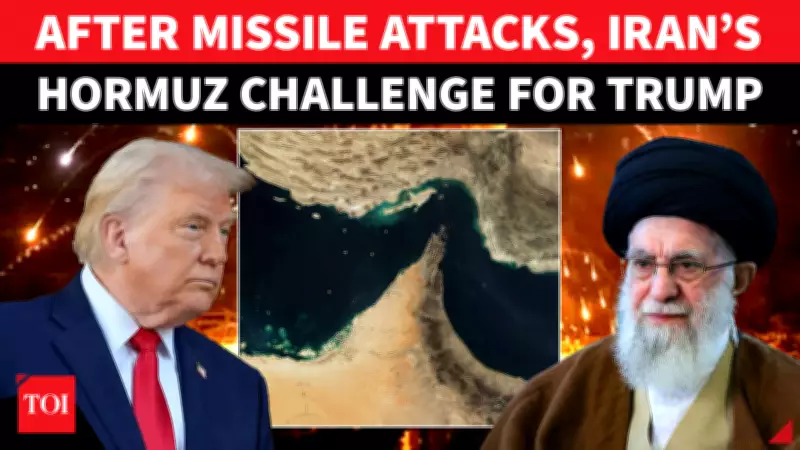
Iran Imposes Maritime Blockade on Strait of Hormuz Following US-Israel Military Strikes
The Islamic Revolutionary Guard Corps of Iran has officially declared a complete closure of the Strait of Hormuz, effectively blocking all vessel traffic through the world's most vital energy chokepoint. This decisive action comes as direct retaliation for recent coordinated military attacks by the United States and Israel against Iranian targets.
Critical Global Energy Passageway Sealed
The narrow maritime passage between Iran and Oman serves as the primary conduit for over twenty percent of global oil consumption and a substantial portion of international liquefied natural gas exports. This strategic waterway is particularly crucial for energy shipments originating from Qatar, one of the world's leading LNG exporters.
Any disruption to Hormuz traffic carries immediate and severe consequences for worldwide energy markets, with experts warning of potential price spikes that could destabilize financial systems and disrupt global supply chains already strained by geopolitical tensions.

Escalating Regional Conflict Threatens Global Economy
With hostilities intensifying between Iran, Israel, and the United States, the maritime standoff in the Persian Gulf represents a dangerous escalation that could transform a regional crisis into a full-blown international economic emergency. The blockade follows a series of military exchanges that have raised tensions throughout the Middle East.
The timing of Iran's move coincides with heightened military activity across the region, including missile attacks on Gulf nations and strikes against American military installations. This development marks a significant escalation in the ongoing confrontation between Tehran and the US-Israel alliance.
Implications for Global Energy Security
The closure of the Strait of Hormuz presents multiple immediate threats:
- Potential doubling or tripling of global oil prices within days
- Disruption of natural gas supplies to Europe and Asia
- Increased shipping costs and insurance premiums for all maritime traffic
- Possible retaliatory measures from affected nations
- Accelerated inflation in energy-dependent economies worldwide
Energy analysts warn that even a temporary blockade could trigger recessionary pressures in vulnerable economies and force emergency measures from major oil-consuming nations. The situation remains fluid as international diplomatic efforts attempt to de-escalate the crisis before it causes irreversible damage to global economic stability.