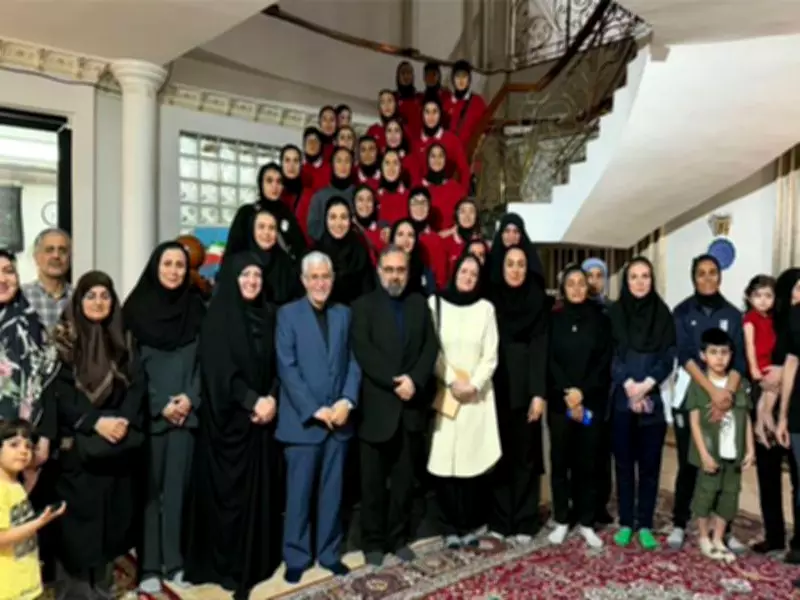
Four Iranian Women Footballers Withdraw Australian Asylum Bids, Arrive at Embassy in Malaysia
In a surprising turn of events, four members of the Iranian women's national football team have withdrawn their asylum applications in Australia and arrived at the Iranian embassy in Malaysia, according to a report by the Iranian Republic of Iranian Broadcasting (IRIB). This development follows a high-profile case where players sought refuge due to fears of persecution in Iran.
Asylum Applications Withdrawn Amid Safety Concerns
IRIB stated in a social media post that the four players, who were in Australia to participate in the 2026 AFC Women's Asian Cup, had applied for asylum after what was described as a "US invasion of Iran." However, they later withdrew these applications and proceeded to the Iranian embassy in Malaysia. The identities of these four players have not been disclosed in this latest report, adding to the uncertainty surrounding their motivations.
Background of the Humanitarian Crisis
Earlier in March, seven members of the Iranian women's national football team were granted humanitarian visas by Australian authorities after escaping from team handlers at a hotel on Australia's Gold Coast. The players involved in this initial group included Fatemeh Pasandideh, Zahra Ghanbari, Zahra Sarbali, Atefeh Ramezanizadeh, and Mona Hamoudi. They were assisted by Australian Federal Police and the Department of Home Affairs in a late-night operation, moving them to a secure location for their safety.

Australia's Home Affairs Minister Tony Burke confirmed the approval of humanitarian visas, stating that the processing was completed after 1:30 AM. The players' concerns about safety emerged after they refused to sing the Iranian national anthem before their opening match against South Korea, an act interpreted as protest and leading to backlash from Iranian state media, which labeled them as "traitors."
International Attention and Political Involvement
The situation garnered significant international attention, with former US President Donald Trump urging the Australian government to provide asylum to the players. In a post on Truth Social, Trump expressed fears that the women could be killed if forced to return to Iran and offered for the US to take them if Australia would not. He later praised Australian Prime Minister Anthony Albanese for handling the "delicate situation," noting that some players had been assisted while others might return due to family safety concerns.
Prime Minister Albanese confirmed that seven team members had requested assistance and were safely located in Australia. However, reports indicate that some players may still return to Iran because of worries about possible repercussions for their families, highlighting the complex pressures faced by the athletes.
Ongoing Developments and Implications
Following their final group-stage match against the Philippines, there were reports of players making distress signals as the team bus departed, underscoring the tense atmosphere. Activists and the Iranian diaspora in Australia had urged authorities to allow the athletes to stay, citing risks of punishment in Iran. The withdrawal of asylum bids by four players adds a new layer to this ongoing saga, raising questions about their future and the broader issues of athlete safety and political asylum in international sports.
This case continues to unfold, with the players' arrival at the Iranian embassy in Malaysia marking a significant shift in their asylum journey, amidst global scrutiny and diplomatic considerations.