

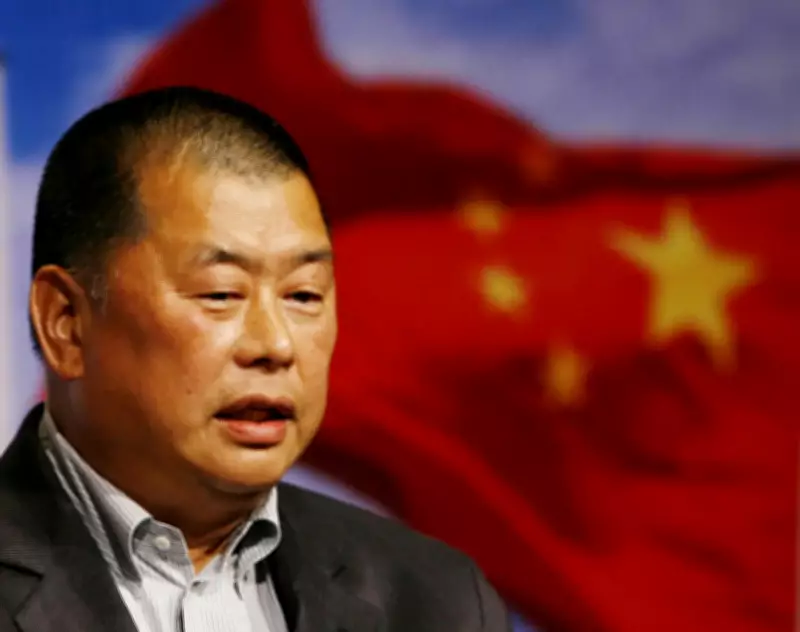
Hong Kong Pro-Democracy Figure Jimmy Lai Receives 20-Year Prison Sentence
In a landmark ruling that has ignited global controversy, Hong Kong–based pro-democracy media personality Jimmy Lai, who holds British citizenship, was sentenced to twenty years in prison on Monday. This severe penalty comes more than five years after his initial arrest in August 2020, marking a significant escalation in the application of China's stringent National Security Law. The sentencing has provoked widespread international outcry, with critics decrying it as a politically motivated move to suppress dissent.
Details of the Conviction and Sentencing
Jimmy Lai, aged 78, was found guilty of the serious charge of "colluding with foreign forces to endanger national security" under the National Security Law enacted by China. He has been incarcerated since 2020 and has previously served time for other criminal convictions, including a fraud case from 2022. This twenty-year sentence stands as the harshest yet imposed under the national security legislation, surpassing the previous record of ten years given to legal scholar Benny Tai earlier in 2024.
According to reports from AFP, Lai, the founder of the now-defunct Apple Daily newspaper, faced two counts of conspiring to collude with foreign forces. Under the National Security Law, this offence carries a potential sentence ranging from ten years to life imprisonment for severe cases. Additionally, he was charged with conspiring to publish "seditious" material under a colonial-era law, which allows for a maximum sentence of two years for first-time offenders.

The judges exercised their discretion in determining that the sentences should run consecutively rather than concurrently. They justified the twenty-year term by stating they had taken a "global view of the total sentence" in light of what they described as Lai's "serious and grave criminal conduct." In practical terms, Lai will spend eighteen more years in jail, with two years overlapping an existing term of five years and nine months he is already serving from his 2022 fraud conviction.
Legal and International Reactions
Lai's lawyer confirmed that he has twenty-eight days to file an appeal, though it remains unclear whether he intends to do so. The National Security Law, enacted in 2024, has significantly tightened restrictions, making it exceedingly difficult for those imprisoned under its provisions to secure early release. If Lai serves the full sentence, he would likely be ninety-six years old upon release, leading many to label it a "death sentence."
Hong Kong's Chief Executive, John Lee, publicly welcomed the verdict, calling it "deeply gratifying." In an official statement, he asserted, "Jimmy Lai's crimes are heinous and evil in the extreme. His heavy 20-year sentence demonstrates the rule of law and upholds justice." Beijing echoed this sentiment, with Foreign Ministry spokesperson Lin Jian declaring the sentence "legitimate, reasonable, and legal," and adding that "there is no room for argument."
In stark contrast, the international community has roundly condemned the ruling. British Foreign Secretary Yvette Cooper characterized it as "a politically motivated prosecution," accusing Beijing of using the National Security Law to "silence critics." She noted that Prime Minister Keir Starmer had directly raised Lai's case with President Xi Jinping during a recent visit to Beijing and affirmed that Britain would continue to engage on the matter. Cooper also referenced the Sino-British Joint Declaration, which governs Hong Kong's status as a Special Administrative Region since its handover to China in 1997.
Several human rights and press freedom organizations have voiced strong objections:

- Reporters Without Borders stated, "Today, the curtain falls on press freedom in Hong Kong. Democracies, such as the UK and the US, must stop prioritising the normalisation of relations with China and instead exert pressure on the Chinese regime and Hong Kong authorities to ensure that Jimmy Lai and all other journalists are released from prison."
- Human Rights Watch described the sentence as "effectively a death sentence," calling it "both cruel and profoundly unjust."
- Amnesty International warned, "The case marks another grim milestone in Hong Kong's transformation from a city governed by the rule of law to one ruled by fear."
- The European Union urged Hong Kong authorities to "restore confidence in press freedom in Hong Kong... and to stop prosecuting journalists."
Broader Implications for Hong Kong
This sentencing underscores the tightening grip of China's National Security Law in Hong Kong, raising serious concerns about the erosion of civil liberties and press freedom in the region. The case of Jimmy Lai serves as a potent symbol of the ongoing crackdown on dissent, with far-reaching implications for journalists, activists, and the international community's relationship with China. As global tensions simmer, the world watches closely to see how this pivotal moment will shape the future of Hong Kong's autonomy and legal framework.





