

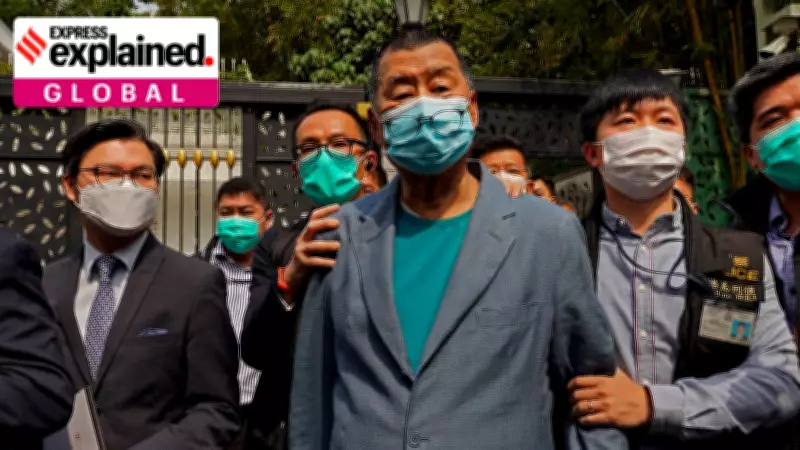
Hong Kong Media Mogul Jimmy Lai Sentenced to 20 Years in Landmark Case
Hong Kong pro-democracy activist and media mogul Jimmy Lai has been sentenced to 20 years in prison, marking the harshest penalty for a national security offence in the region. The 78-year-old founder of the tabloid Apple Daily faced charges including conspiracy to publish seditious material and conspiracy to collude with foreign forces, stemming from meetings with US politicians.
Background and Conviction Details
Lai spent over 1,800 days in solitary confinement before his conviction in December 2025. His newspaper, Apple Daily, which played a central role during the 2019 Hong Kong protests, shut down in 2021 amid Beijing's crackdown on pro-democracy agitators. Alongside Lai, six former employees of the publication also received sentences.
The charges reflect China's broader efforts to suppress dissent, with Lai's case viewed as a key example of Beijing's tightening control over Hong Kong, a Special Administrative Region (SAR).

International Reactions and Political Context
Western governments, including the US and UK, have called for Lai's release, but China has dismissed these appeals as "blatant interference" in its internal affairs. British Prime Minister Keir Starmer raised the issue with Chinese President Xi Jinping, while former US President Donald Trump had previously promised to secure Lai's freedom.
Hong Kong's autonomy has steadily eroded since its handover from Britain to China in 1997 under the "one country, two systems" principle. The 2019 proposal to amend the Fugitive Offenders Ordinance sparked widespread protests, leading to fears about judicial independence and Beijing's influence.
China's National Security Law and Broader Crackdown
In 2020, Beijing enacted the National Security Law, which sharply curtailed dissent in Hong Kong. Lai's arrest followed soon after, as part of a repressive campaign under President Xi Jinping to consolidate control and eliminate foreign influence.
This crackdown extends beyond Hong Kong:
- Entrepreneurs and celebrities critical of the regime have been purged in anti-graft cases.
- Major corporations like Alibaba and Tencent have faced regulatory actions to curb corporate power.
- Military officials, including top general Zhang Youxia, have been removed from positions.
- In late 2025, Beijing initiated measures against "naked officials" with family abroad to neutralize Western leverage.
Implications for Hong Kong and Beyond
Lai's sentencing underscores the diminishing freedoms in Hong Kong and China's assertive stance on national sovereignty. President Xi, who removed presidential term limits in 2018, holds unprecedented power as head of state, party, and military, drawing comparisons to Mao Zedong's era.
The case highlights the challenges faced by pro-democracy voices in the region and signals Beijing's unwavering commitment to silencing opposition, both domestically and in territories like Taiwan.






