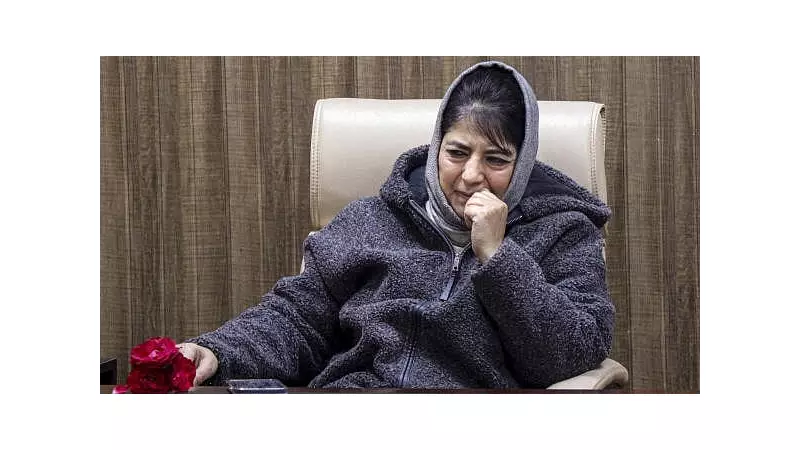
The Jammu and Kashmir High Court has dismissed a Public Interest Litigation (PIL) filed by former Chief Minister Mehbooba Mufti, which sought the repatriation of undertrial prisoners currently lodged in jails outside the union territory. The court found the petition to be too broad and lacking in concrete factual details.
Bench Finds Pleas Lacking in Specifics
A division bench comprising Chief Justice Arun Palli and Justice Rajnesh Oswal heard the case. In their ruling, the judges observed that the PIL was "broadly worded" and did not provide sufficient factual backing or specific information to support its claims. The bench emphasized the necessity for petitioners to present precise details and data when seeking judicial intervention of this nature.
Details of the Dismissed Petition
The PIL, filed by Peoples Democratic Party (PDP) president Mehbooba Mufti, had appealed for the return of undertrial prisoners from Jammu and Kashmir who are incarcerated in various jails across the country. The plea argued for their repatriation to facilities within the union territory. However, the court determined that the petition failed to meet the required legal standards for such a broad directive.

The order was pronounced on 23 December 2025. The court's decision underscores a key legal principle: PILs must be grounded in specific facts and clear particulars to enable judicial review and potential relief. Vague or broadly framed petitions are unlikely to succeed.
Legal and Political Implications
This dismissal represents a significant legal setback for the political efforts aimed at addressing the concerns of detainees from the region. The issue of prisoners lodged outside J&K has been a sensitive political topic, with several parties and civil society groups advocating for their return.
The High Court's ruling reaffirms the judiciary's role in scrutinizing the substance and specifics of petitions, regardless of the petitioner's stature or the emotional weight of the issue. It sets a precedent that similar future pleas will need to be meticulously detailed, citing specific cases, legal provisions, and individual circumstances of the prisoners in question.
For now, the status quo regarding the location of these undertrial prisoners remains unchanged following this judicial decision.