

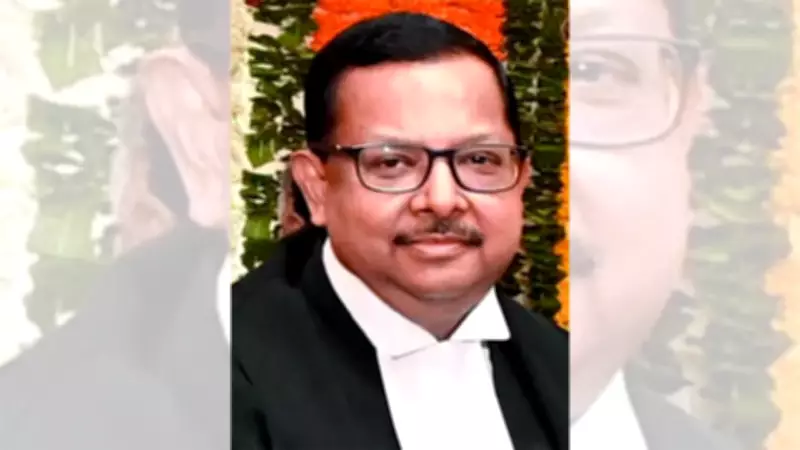
SC Justice Ujjal Bhuyan Calls for Debate, Judicial Caution, and Social Reform in Viksit Bharat Vision
In a significant address at the first national conference of the SC Bar Association in Bengaluru, Supreme Court Justice Ujjal Bhuyan articulated a critical perspective on India's ambitious goal of becoming a developed nation, Viksit Bharat, by 2047. He stressed that this vision must encompass robust debate, judicial independence, and the eradication of deep-seated social inequalities, particularly caste-based discrimination and atrocities against Dalits.
Questioning the Misuse of Anti-Terror Laws
Justice Bhuyan presented alarming data on the Unlawful Activities (Prevention) Act (UAPA), highlighting that from 2019 to 2023, thousands were arrested under this anti-terrorism law, yet the average conviction rate remained around a mere 5%. He argued that this low conviction rate indicates overuse, if not misuse, of the legislation, burdening the criminal justice system and leading to case backlogs.
"With a general conviction rate of 5% or less, and acquittal of more than 95% of UAPA cases, why should an accused be kept in jail without even filing a chargesheet against him? This can’t be a model of Viksit Bharat," Justice Bhuyan asserted. He emphasized that such practices contradict the principle that 'bail is the norm and jail the exception,' causing delays in justice delivery.

Advocating for Tolerance and Dissent in a Developed India
Justice Bhuyan called for greater room for debate and dissent in the Viksit Bharat framework, stating that divergent views should be respected and not criminalized. "Debate should not be criminalised. There should be more tolerance towards diverse views and criticism," he remarked. He referenced the 1986 Supreme Court judgment in the Bijoe Emmanuel case, which upheld the rights of children from the Jehovah's Witnesses sect to not sing the national anthem, as an example of judicial courage in protecting tolerance.
Addressing Caste-Based Discrimination and Social Fault Lines
Highlighting societal imbalances, Justice Bhuyan pointed to the persistent atrocities on Dalits and caste-based discrimination as major obstacles to development. "Deep social fault lines are there. Viksit Bharat cannot countenance such fault lines," he declared. He cited disturbing instances, such as parents refusing food prepared by Dalit women or Dalits being subjected to humiliation, arguing that such practices are incompatible with a developed nation.
"We cannot have Viksit Bharat when Dalit people are made to stand in the corridor and people urinate on them. This can’t be the model of development. Respect for the individual must be protected," Justice Bhuyan emphasized, urging for the elimination of these social disparities.
Judicial Role and Constitutional Milestones
While acknowledging the political executive's goal of Viksit Bharat by 2047 as achievable, Justice Bhuyan expressed reservations about the judiciary joining this 'bandwagon.' He suggested that the judiciary should instead focus on the year 2050, marking the centenary of both the Constitution and the Supreme Court, as a more appropriate milestone for reflection and assessment.
"My model of Viksit Bharat is equal distribution of wealth and disappearance of acute disparity... which is also the goal set in directive principles of state policies in Constitution," he stated, aligning his vision with constitutional principles. He concluded that in a developed India, the judiciary must maintain its distinct role, neither as an eternal critic nor a cheerleader, but as an independent arbiter of justice.






