Kunal Kamra and Haresh Jagtiani File Petition Against Sahyog Portal and Amended IT Rules
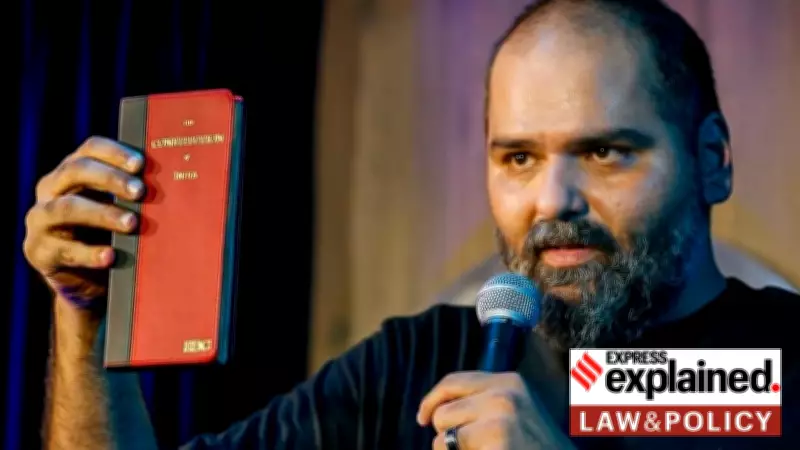
Stand-up comedian Kunal Kamra and senior advocate Haresh Jagtiani have approached the Bombay High Court, challenging the controversial Sahyog Portal and recent amendments to the Information Technology (IT) Rules. The petition alleges that these measures unlawfully empower government officers to issue content takedown and blocking orders without due process, raising significant concerns over freedom of speech and constitutional rights. A Division Bench of the Bombay High Court is scheduled to hear the matter on March 16, 2026.
Understanding the Sahyog Portal and Its Functionality
The Sahyog Portal, launched in 2024 by the Union Ministry of Electronics and Information Technology in collaboration with the Ministry of Home Affairs, was designed to streamline the blocking of "objectionable content" online under the IT Act, 2000. This platform aims to bring authorized agencies and intermediaries together, automating immediate action against unlawful online material. According to RTI data obtained by The Indian Express, over 2,300 blocking orders were issued to 19 online platforms, including WhatsApp, Facebook, YouTube, and Instagram, between October 2024 and October 2025. Additionally, more than 118 intermediaries have been onboarded, indicating a growing compliance requirement with state-issued takedown demands. These orders were sent by Central, state, and Union Territory agencies, highlighting the portal's widespread use.
This is not the first legal challenge against the Sahyog Portal. Social media platform X, formerly Twitter, had earlier approached the Karnataka High Court, where a single-judge bench upheld its validity in September 2025. X's appeal is currently pending before a division bench, underscoring ongoing judicial scrutiny of the portal's operations.
The Amended IT Rule and Its Implications
In October 2025, the Union government notified an amendment to Rule 3(1)(d) of the IT Rules, which mandates intermediaries to remove or disable access to information used for unlawful acts within 36 hours upon "actual knowledge." This knowledge is defined as arising from court orders or written notices from authorized senior officers, specifying the legal basis, statutory provision, nature of the unlawful act, and exact online location (URL/identifier) of the content. The amended rule, effective from November 15, 2025, was introduced to ensure intermediaries act in a "transparent, proportionate and accountable manner." However, critics argue it facilitates rapid content removal without adequate safeguards.
Key Objections Raised by the Petitioners
Kamra and Jagtiani contend that the Sahyog Portal "unlawfully conferred" powers to thousands of Central and state officers to issue takedown and blocking orders peremptorily, bypassing the procedures mandated under the IT Act. They argue that the amended IT Rule allows for "unilateral takedown or blocking" of internet information through orders from designated officers, without providing notices or hearings for content originators. According to the petitioners, these provisions create a parallel takedown regime to Section 69A of the IT Act and the associated Blocking Rules of 2009, lacking essential safeguards.
The petitioners assert that these measures violate fundamental rights under Article 19(1)(g), which guarantees the right to practice any profession or carry on any occupation, trade, or business, and Article 14, ensuring equality before the law. They claim that conferring such powers to government officers results in "an unconstitutional and unreasonable restriction on the freedom of speech," exceeding the limitations permitted by the Constitution. In their pleas, they state, "Rule 3(1)(d) and the Sahyog Portal render all information on the internet vulnerable to arbitrary takedowns, provide for no remedy against such action, and effectively give thousands of government officers at the Central and State level unchecked power over information flow on the internet. It strikes at the heart of democracy, and a citizen's right to information."
Relief Sought by the Petitioners
In their separate petitions, Kamra and Jagtiani have requested the Bombay High Court to declare that the amended Rule 3(1)(d) does not confer authority to issue blocking orders. They also seek a declaration that Section 79(3)(b) of the IT Act does not grant such authority. Additionally, they have asked the court to issue a direction to "forthwith disable and dismantle the Sahyog Portal." Pending final disposal, the pleas seek interim suspension of the portal and reliefs to restrain authorities from enforcing the amended rule, ensuring that any government officer cannot issue information blocking or takedown orders without following the procedure required under Section 69A of the IT Act.
This legal battle highlights the ongoing tension between government efforts to regulate online content and the protection of free speech and democratic principles in India's digital landscape.