

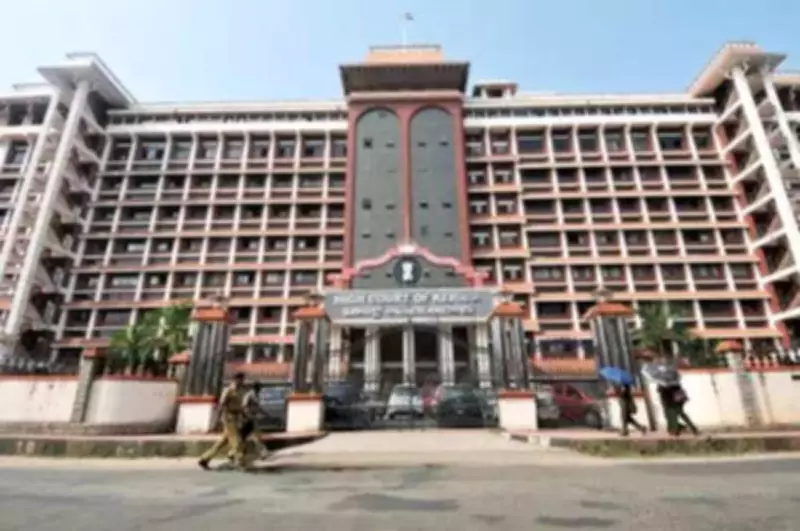
Kerala High Court Reverses Order to Seize Six Churches in Orthodox-Jacobite Dispute
In a significant legal development, the Kerala High Court has set aside a single bench order that directed the district collectors of Ernakulam and Palakkad to take possession of six churches embroiled in the longstanding Orthodox-Jacobite dispute. The division bench, comprising Justices Anil K Narendran and S Muralee Krishna, delivered this ruling while allowing appeals against the single bench's order in contempt proceedings.
Background of the Case
The controversy stems from contempt petitions filed by members of the Orthodox faction, alleging non-compliance by government officials with an earlier court directive. On August 30, 2024, the single bench had suo motu impleaded both district collectors and ordered them to take possession of the churches to ensure police protection for the Orthodox faction to enter and conduct services.
The affected churches include St Mary's Orthodox Church in Odakkali, St John's Besphage Orthodox Syrian Church in Pulinthanam, Pothanikkad, and St Thomas Orthodox Church in Mazhuvannur, all located in Ernakulam district. In Palakkad district, the churches involved are St Mary's Orthodox Church in Mangalam Dam, St Thomas Orthodox Syrian Church in Erikkinchira, and St Thomas Orthodox Syrian Church in Cherukunnam.

Legal Arguments and Bench Observations
The division bench meticulously examined whether the High Court, in a contempt petition arising from non-compliance with an order granting police protection, could lawfully direct the taking over of possession of a religious institution. The bench underscored that a writ seeking "police protection" has a limited scope, typically confined to cases where the court is approached to protect rights already established by a decree or order of a civil court.
The bench firmly stated that such jurisdiction cannot be extended to situations where rights have not been clearly determined, either finally or even at an interlocutory stage. This principle is particularly crucial in disputes involving religious affairs governed by specific constitutions, such as the 1934 Constitution of the Malankara Orthodox Church.
Jurisdictional Limits in Religious Disputes
Elaborating further, the division bench held that in disputes relating to the religious affairs of a parish church governed by the 1934 Constitution, the High Court cannot direct the civil administration to take over possession of the church. This ruling emphasizes the separation of judicial and administrative functions in sensitive religious matters.
However, the bench clarified that in appropriate cases where repeated disobedience of a decree results in law-and-order issues, the High Court, as a constitutional court, may grant police protection. This is to ensure the smooth conduct of religious services and related affairs in accordance with the 1934 Constitution, thereby balancing legal authority with practical necessities.
Outcome and Clarifications
Consequently, the division bench set aside the single bench's order directing the collectors to take possession of the six churches. The High Court also clarified that it is now for the single bench to proceed with the contempt cases, taking note of the legal principles laid down in this judgment.
This decision follows a complex legal journey. Previously, a division bench had dismissed the contempt appeals on October 17, 2024, prompting the appellants to approach the Supreme Court via special leave petitions (SLPs). The Supreme Court, on January 30, 2025, set aside the division bench's order and remitted the matters back to the High Court for fresh consideration after hearing all concerned parties, leading to the current ruling.
The judgment underscores the judiciary's cautious approach in intervening in religious disputes, prioritizing legal frameworks over administrative actions unless absolutely necessary for maintaining public order.






