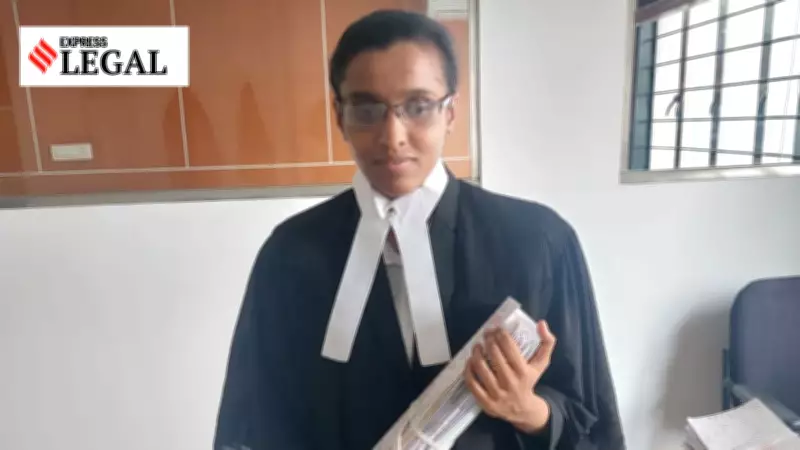
Kerala Welcomes Its First Blind Woman Judge in Historic Judicial Milestone
In a groundbreaking achievement that marks a significant step towards inclusivity in India's legal system, Kerala is poised to inaugurate Thanya Nathan C as its first blind woman judge. Her remarkable journey from enrolling as an advocate to topping the merit list for candidates with benchmark disabilities in the Civil Judges (Junior Division) Examination, Kerala Judicial Service, 2025, within a few months, stands as a powerful testament to unwavering determination and relentless hard work.
A Journey Fueled by Self-Study and Courtroom Practice
What makes Thanya Nathan's story exceptionally inspiring is her approach to preparation. She accomplished this feat through rigorous self-study while actively practicing in court, refusing to leave the courtroom for coaching. In an exclusive conversation, she revealed that her decision to pursue judgeship came only recently, after enrolling as an advocate in August 2024. Initially, she faced uncertainties due to systemic barriers that previously barred visually impaired candidates from such exams, making it seem "beyond a dream."
Overcoming Challenges with Digital Resources and New Laws
Thanya Nathan highlighted major challenges during her preparation, primarily the availability of accessible study materials. As a blind individual, she relied solely on digital resources, which were ample for older laws like the Indian Penal Code (IPC) and Code of Criminal Procedure (CrPC). However, the introduction of the three new criminal laws—the Bharatiya Nyaya Sanhita (BNS), Bharatiya Nagarik Suraksha Sanhita (BNSS), and the Bharatiya Sakshya Adhiniyam (BSA)—posed a significant hurdle. With no structured materials available, she had to read the bare Acts and expand them into necessary points through sheer diligence.

Support Systems and Examination Accommodations
Throughout her journey, Thanya Nathan credited her family, parents, sister, and senior for providing unwavering motivation without pressure, allowing her to embrace the possibility of either clearing the exam or continuing as an advocate. During the examination process, accommodations included a scribe to read questions and dictate answers, along with a separate room to ensure fairness. She emphasized that while these facilities were helpful, the onus of preparation rested on her shoulders.
Inspired by Supreme Court's Landmark 2025 Judgment
Thanya Nathan's achievement aligns with a pivotal Supreme Court judgment from March 3, 2025, in the case Re: Recruitment of visually impaired in judicial services. The court championed inclusivity, ruling that visually impaired candidates cannot be deemed "not suitable" for judicial service and must not face discrimination. Instead, it called for affirmative action by the state to create an inclusive framework, a decision that paved the way for her and others with disabilities.
Advocating for Greater Accessibility in Legal Education
Reflecting on her experiences, Thanya Nathan urged for more accessible study materials in the legal education system, suggesting the provision of Braille scripts to aid understanding. She believes that such initiatives would make the profession more inclusive for persons with disabilities (PwDs), reducing the hardships she faced in sourcing materials independently.
A Message of Empowerment and Perseverance
To aspiring individuals with disabilities eyeing the judiciary, Thanya Nathan offers a resounding message: "Never hesitate to come to the judiciary because the Honourable Supreme Court has opened the door for us. Now, we must take the initiative, study hard, work consistently, and never think we are incapable." Her story not only breaks stereotypes but also inspires a new generation to pursue their dreams in the legal fraternity, reinforcing that barriers are meant to be overcome with resilience and support.