

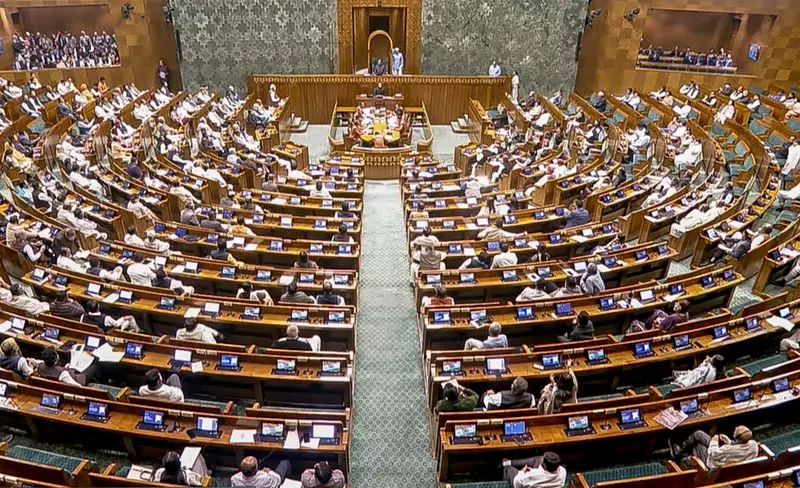
In a significant move towards legal simplification, the Lok Sabha on Wednesday passed a bill aimed at removing a substantial number of archaic and redundant laws from India's statute books. The proposed legislation, known as the Repealing and Amending Bill, 2024, seeks to consign 71 obsolete laws to history, thereby decluttering the nation's complex legal framework.
Clearing the Legal Cobwebs: A Long-Overdue Reform
The bill was introduced by Law Minister Arjun Ram Meghwal, who emphasized the government's commitment to weeding out laws that have lost their relevance in contemporary India. This exercise is part of a continuous process to ensure that the legal system remains agile, accessible, and free from the burden of deadwood. The laws identified for repeal span a wide range of subjects, from colonial-era regulations to more recent enactments that have been superseded or rendered ineffective by newer legislation or changing societal norms.
Among the notable laws slated for repeal is the Indian Fisheries Act, 1897. This over-125-year-old law, which was designed to protect fisheries in tidal and inland waters, is now considered redundant as its provisions are adequately covered under more modern environmental and state laws. Another colonial relic on the chopping block is the Foreign Recruiting Act, 1874, which regulated the recruitment of Indian citizens for service under foreign governments—a practice no longer relevant in its original form.

Key Legislations Facing Repeal
The list of 71 laws includes several other interesting entries that highlight how much India has evolved. For instance, the Coffee Act, 1942 is set to be repealed. Originally enacted to protect the interests of coffee growers in a controlled economy, the act's core functions have long been taken over by the Coffee Board under newer policies, making the original law obsolete.
Other laws identified for removal include:
- The Indian Tramways Act, 1886, which governed a mode of transport now largely extinct.
- The Prevention of Seditious Meetings Act, 1911, a colonial tool for controlling assemblies.
- The Registration of Foreigners Act, 1939, whose provisions are now subsumed under the Citizenship Act and the Foreigners Act.
- Various amending acts that have served their purpose and no longer have any independent legal standing.
Implications and the Path Forward for Governance
The passage of this bill is more than a symbolic clean-up; it has tangible benefits for governance and ease of living. By removing these obsolete laws, the government aims to reduce unnecessary regulatory burdens and minimize confusion for citizens, businesses, and even the judiciary. A leaner legal code is easier to navigate, interpret, and enforce, contributing to a more efficient justice delivery system.
This initiative aligns with the broader vision of minimum government, maximum governance. It reflects an understanding that a modern nation cannot be burdened by legal artifacts from a bygone era. The Law Minister highlighted that such repealing exercises are conducted periodically to ensure the legal system evolves with the times. The bill, having been passed by the Lok Sabha, will now move to the Rajya Sabha for consideration and passage before receiving the President's assent to become law.
Experts view this as a positive step towards legal modernization. However, they also caution that the real test lies in ensuring that the repeal of these laws does not create unintended legal vacuums and that all necessary provisions have been adequately transferred to other active legislations. The government has assured that a thorough examination has been conducted to prevent any such issues, marking this move as a carefully considered stride in India's ongoing legal reform journey.






