

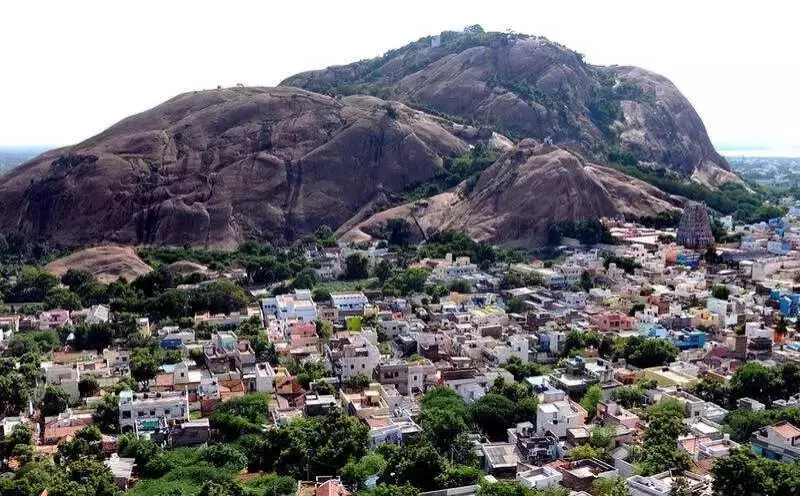
In a significant ruling, the Madras High Court has firmly rejected the Tamil Nadu government's apprehensions about potential law and order issues, labeling them an 'imaginary ghost'. The court has upheld a previous order directing the Subramaniya Swamy Temple in Thiruparankundram, Madurai, to light the sacred Karthigai deepam at a specific stone pillar on the hill peak during the annual festival.
Court's Directives for Peaceful Observance
A division bench comprising Justice G Jayachandran and Justice K K Ramakrishnan delivered the verdict on Tuesday, disposing of a batch of appeals. The bench mandated that the temple management, or devasthanam, must light the lamp at the deepathoon (stone pillar) with its own team. However, it imposed strict conditions: no members of the public will be allowed to accompany the team, and the number of team members must be decided in consultation with the Archaeological Survey of India (ASI) and the police.
The court assigned the Madurai District Collector the responsibility of coordinating and supervising the entire event. The judges expressed hope that implementing these directions, which can be modified for other community festivals, would ensure 'only light and not any fight.'

Sharp Rebuke to State's 'Ridiculous' Fear
The court delivered a scathing critique of the state government's stance on possible disturbances. The bench observed that it was 'ridiculous and hard to believe the fear of the mighty state' that allowing a few temple representatives to light a lamp once a year on temple-owned land would disrupt public peace.
They remarked that such disturbance might occur only if sponsored by the state itself, adding a prayer that 'no state should stoop to that level to achieve their political agenda.' The judges concluded that this fear was a fabricated tool to pit communities against each other under a veil of suspicion.
Management and Harmony Concerns Addressed
Addressing logistical concerns, the court stated that managing the event by allowing a few temple personnel to the pillar while devotees worshiped at the foothill was not an unmanageable task. It suggested that projecting the event as a cause for stampede or disharmony was an 'exposure of their incapacity to maintain law and order or hesitant to bring harmony among the communities.'
The court also dismissed the argument from the government and temple management that the current lighting location was aligned with agama sastra because it was directly above the sanctum sanctorum. The bench noted that the present site is called 'Uchi Pillayar Temple,' but is neither the hilltop (Uchi) nor houses a Pillayar idol.
Evidence and Property Rights Upheld
The judges pointed out that the appellants failed to provide formidable evidence that Saivite agama sastra prohibits lighting a lamp at a location not directly above the deity. Crucially, the court affirmed that the stone pillar is located on a portion of the hill previously declared by a civil court as the property of the devasthanam.
It clarified that the Wakf Board currently has no locus standi in the matter. The court also noted a 'mischievous submission' made during arguments claiming the lamp pillar belonged to the nearby Sikandar Badusha Dargah.
The bench revealed that it initially considered mediation for an amicable settlement. However, it realized that interlopers and onlookers benefited from continued animosity between communities, aiming to 'play the spoil game.' The ruling reinforces the temple's right to conduct its ritual while emphasizing the state's duty to ensure harmony and manage law and order effectively.






