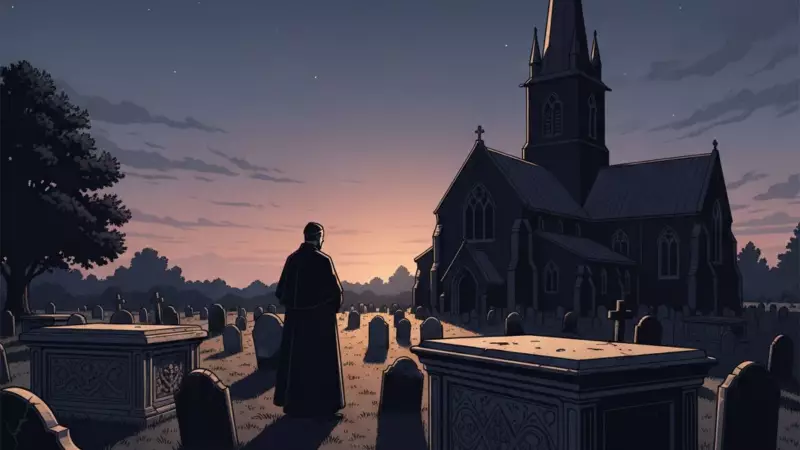
In a significant ruling that intertwines property rights with the sanctity of final resting places, the Madras High Court has strongly intervened in a contentious dispute over a century-old Christian cemetery. The court declared that a Bishop is not entitled to treat a burial ground as his personal field, emphasizing the constitutional "right to dignity in death."
Court Halts Demolition, Cites "Sacred Trust"
The case reached Justice L Victoria Gowri after a parish member filed a plea alleging that church officials, in January, used three JCB machines to demolish existing graves and tombs in the old cemetery. This action was taken without the consent of the deceased's families or the wider church community. The petitioner highlighted that families paid around Rs 20,000 per burial for grave space, treating the site as a sacred space for generations.
Justice Gowri noted that the demolition of tomb structures without consultation prima facie attracts definitions of "offering indignity to any human corpse" and "trespass in any place of sepulture." The court firmly rejected the church office-bearers' argument that canon law and ecclesiastical hierarchy grant the Bishop and Parish priest absolute ownership and control, including the power to permit demolition.

"Right to Dignity in Death" Under Article 21
The court delivered a profound interpretation of the right to life under Article 21 of the Indian Constitution. Justice Gowri stated that this fundamental right encompasses the "right to dignity in death" and the "right to decent burial." The order elaborated that human dignity is not confined to the living but extends to the dead, making the proper treatment of remains and burial an integral aspect of that dignity.
Further strengthening its stance, the High Court referenced international laws, acknowledging their persuasive value. It reinforced the universal principle that burial grounds are loci of human dignity, privacy, family memory, and cultural identity. The court stated that arbitrary demolition or desecration of such sites is incompatible with contemporary human rights standards.
Bishop as a Trustee, Not an Absolute Owner
In a key observation, the court clarified the nature of property holding, especially for religious assets dedicated to public use. It ruled that any holder of such property is a "trustee" who is bound by constitutional limitations, human rights norms, and statutory restrictions. "Describing the Bishop as 'title holder' does not mean that he has an absolute right to 'plough the cemetery like a field'," the court famously remarked.
The bench described the church cemetery as a "sacred trust" held for the benefit of the faithful and for posterity, emphasizing that it is not a disposable asset in the hands of administrators. This framing places community rights and sentiments above administrative control.
On the procedural front, the court found that the trial court had not examined the matter on merits due to a technical defect—the absence of a requisite supporting affidavit. Justice Gowri directed the matter to be remanded back to the trial court, stating the defect was curable and the petitioners must be given a chance to file the affidavit before any order on merits is passed.
This ruling sets a crucial precedent, balancing religious administrative authority with the inviolable human rights attached to burial grounds and the profound emotional and cultural connections communities have with them.