

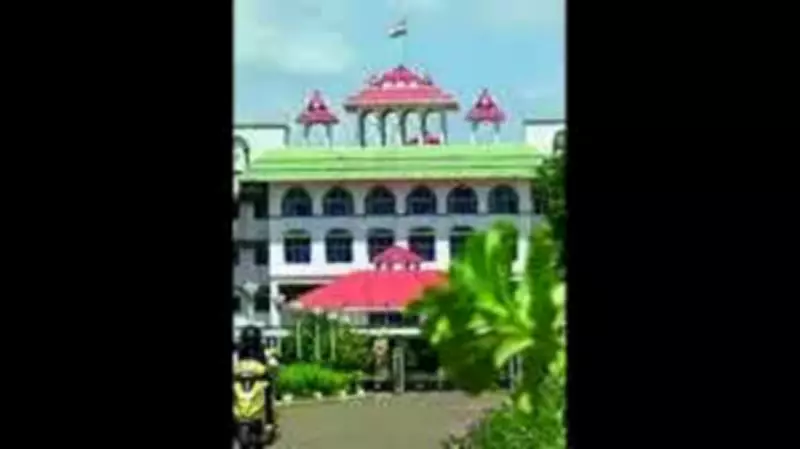
Madras High Court Clarifies Limits of Protest Rights, Imposes Penalty on Petitioner
The Madras High Court has delivered a significant ruling emphasizing that the right to protest cannot be interpreted as an absolute entitlement to occupy public spaces indefinitely. In a judgment on Tuesday, the court dismissed a petition filed by a man from Theni district who sought permission to conduct daily protests at a busy junction until the end of 'World War'. The court imposed a cost of ₹50,000 on the petitioner for his refusal to accept reasonable alternative venues and for making disparaging remarks about respected public figures.
Court Rejects Indefinite Protest Request as Administratively Burdensome
Justice L Victoria Gowri, presiding over the case, observed that the petitioner's request for permission to protest daily at a busy junction in Thenkarai, extending indefinitely 'until the World War ends', placed an impossible administrative burden on authorities. The judge noted that such a demand disregards the necessary regulation of public spaces and would hinder the general public due to the location's high traffic.
The court underscored that while peaceful protest within legal frameworks is a legitimate democratic expression, these rights are not absolute. Justice Gowri stated, "The right to protest cannot be elevated into a right to occupy any place, at any time, for any duration, solely at the will of the person asserting it." This principle was central to the dismissal of the plea filed by petitioner S Prabhu, who had challenged an order by the Thenkarai police denying permission for the protests.

Petitioner Refuses Alternative Venues, Makes Controversial Remarks
During the hearing, the court explored alternative solutions to accommodate the petitioner's desire to protest. Police authorities indicated willingness to permit the program at two alternative locations: near the statue of B R Ambedkar at Periyakulam or near the statue of Pasumpon Muthuramalinga Thevar at Vadakarai, Periyakulam. However, the petitioner refused these options, asserting that both leaders had become icons of casteism and that he did not wish to conduct his protest in their vicinity.
The court took a serious view of these remarks, describing them as "wholly unwarranted" in a judicial proceeding. Justice Gowri emphasized the esteemed status of both figures, noting that Ambedkar is celebrated as the principal architect of the Indian Constitution and a champion of social justice, equality, and human dignity. Similarly, Muthuramalinga Thevar is recognized as a significant historical and political figure in the region.
"A litigant cannot be permitted to justify his refusal of reasonable alternatives by making disparaging generalisations about personalities of such public importance," the judge observed, highlighting the inappropriate nature of the petitioner's comments.
Court Imposes Cost for Wasting Judicial Time and Intemperate Conduct
In response to the petitioner's conduct, which included consuming precious judicial time with an impractical request and making intemperate remarks, the court dismissed the petition and imposed a cost of ₹50,000. This amount is payable to the Victoria Memorial Government Higher Secondary School in Periyakulam, Theni district, within one week. Failure to pay the cost within the stipulated time will result in the petitioner undergoing simple imprisonment for one day in the sub-jail at Periyakulam.
The judgment serves as a reminder of the balance between democratic rights and public order. It reinforces that while protests are protected, they must be exercised responsibly, without causing undue disruption or disrespecting national icons. This ruling is expected to guide future cases involving similar claims of indefinite protest rights in public spaces.






