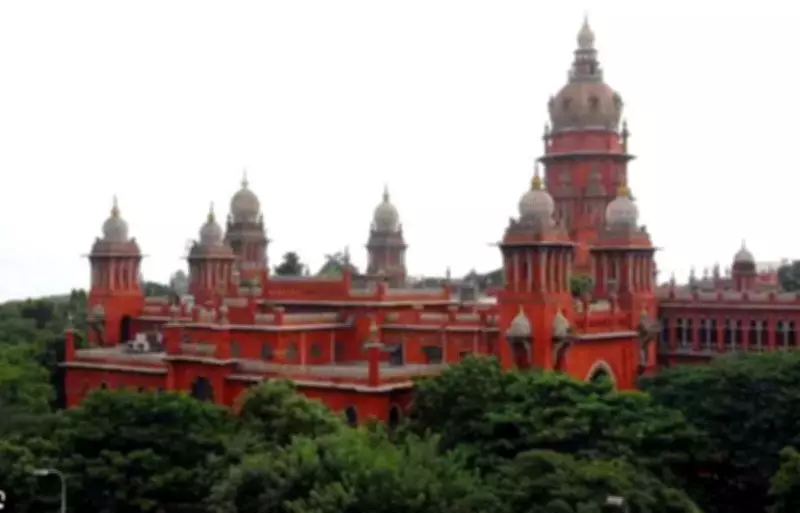
Madras High Court Intervenes in Temple Mandapam Reconstruction Case
The Madras High Court has issued a significant order to stall the reconstruction of a century-old stone mandapam located within the Chinthamani Vinayagar Vagaiyara Arulmighu Subramania Swamy temple in Kancheepuram. This decision comes after the mandapam was demolished by temple authorities, who claimed it did not adhere to vastu principles, a traditional Indian architectural system.
Court Questions Demolition as "Unconscionable"
During a hearing on Monday, Justice D Bharatha Chakravarthy expressed strong reservations about the demolition. "On perusal of the photographs produced by the temple authorities, the demolition simply seems to be unconscionable and, to the naked eye, the mandapam seems perfect," the judge remarked. The court reviewed original photographs of the temple and the mandapam, noting that the structure was an ancient stone-built hall situated at the front of the temple.
Justice Chakravarthy emphasized the historical and architectural value of the mandapam, stating, "It will be extremely difficult to find even workmanship to recreate the mandapam in the same manner." This highlights concerns over the loss of heritage and craftsmanship involved in such ancient constructions.

Legal Plea and Encroachment Allegations
The case originated from a plea filed by S Vasantha and V Shanmugavel, who sought to restrain the temple authorities from reconstructing the mandapam on the eastern side. They argued that this reconstruction would affect the entrance and exit to their property adjacent to the temple. In response, the temple authorities contended that the petitioners had encroached on a public road, thereby invalidating their complaints.
However, the court's focus shifted to the demolition itself, questioning the basis on which it was carried out. The authorities had obtained permission from the heritage committee by filing a report stating that the mandapam was irregular and not in accordance with vastu principles. The court pointed out that this led to the approval for demolition and reconstruction using the same structural stones.
Court Directs Explanation on Vastu Principles
In a decisive move, the Madras High Court directed the temple authorities to file a detailed report explaining their stand that the mandapam was not constructed as per vastu principles. This directive aims to scrutinize the validity of the demolition justification and ensure transparency in the process.
The case has been adjourned to February 13 for further hearing, pending the submission of this report. This interim order underscores the court's commitment to preserving cultural heritage while addressing legal disputes fairly.
Implications for Heritage Conservation
This ruling raises important questions about the balance between religious practices, such as adhering to vastu, and the preservation of historical structures. It also highlights the role of heritage committees in approving demolitions, suggesting a need for more rigorous oversight to prevent unnecessary loss of ancient architecture.
The incident in Kancheepuram serves as a reminder of the ongoing challenges in managing India's rich cultural heritage, where modern renovations often clash with conservation efforts. The court's intervention may set a precedent for similar cases involving temple reconstructions and heritage sites across the region.