Maharashtra Legislative Council Passes Groundbreaking Prison Reform Legislation
In a landmark move to modernize its correctional system, the Maharashtra legislative council on Wednesday approved the progressive Maharashtra Prisons and Correctional Services Bill, 2025. This comprehensive legislation aims to transform prisons from mere confinement facilities into centers of genuine correction and rehabilitation.
Replacing Outdated Colonial-Era Statutes
The newly passed bill seeks to officially replace the antiquated Prisons Act of 1894 and the Prisoners Act of 1900, laws that have governed the state's prison system for over a century. Following its passage during the winter assembly session, the bill will now proceed to the governor for assent and subsequently to the President of India for ratification.
Core Focus on Rehabilitation and Reintegration
The legislation introduces several innovative provisions designed to facilitate inmates' successful return to society:

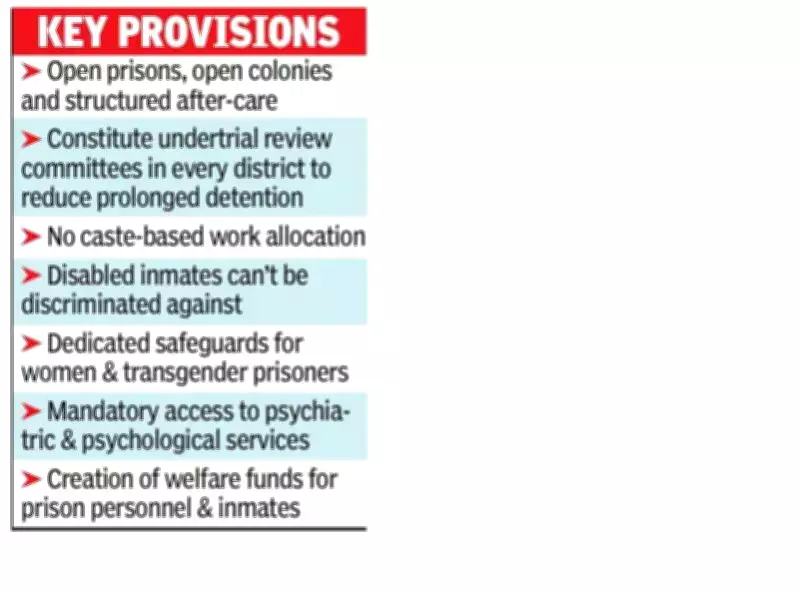
- Open Prisons and Open Colonies: These facilities will provide transitional environments to ease inmates back into community life.
- Structured After-Care Services: Comprehensive support systems will help former prisoners rebuild their lives with dignity.
- Grievance Redressal Mechanism: A formal system to address inmate complaints and concerns.
- Non-Discrimination Clauses: Explicit prohibitions against caste-based segregation in prison work assignments.
Special Provisions for Vulnerable Populations
The bill mandates specific protections for various inmate categories:
- Women and Transgender Inmates: Separate women's wards in prison hospitals and gender-sensitive accommodations.
- Prisoners with Disabilities: Guaranteed access to psychiatric and psychological care services.
- Segregation by Category: Separate facilities for undertrials, convicts, high-security inmates, and young offenders to address their specific needs.
Administrative and Technological Innovations
The legislation introduces significant structural and technological improvements:
- Undertrial Review Committees: District-level committees will periodically examine pending cases and recommend appropriate actions to trial courts, potentially speeding up justice delivery.
- Codified Furlough and Parole: Clear eligibility norms and standardized procedures for temporary release programs.
- Dedicated Prisons Force: Establishment of a specialized correctional services workforce.
- Welfare Funds: Separate funds for both staff and inmate welfare programs.
- Technology Integration: Implementation of biometric systems, CCTV surveillance, RFID tracking, and integration with the interoperable criminal justice system to enhance transparency and security.
Political Response and Legislative Foundation
While the government champions the reforms as creating "centers of correction, not mere confinement," some opposition leaders have expressed skepticism. Shiv Sena (UBT) leader Anil Parab opposed the bill, claiming the proposed reforms are not practically achievable. The state government clarified that the legislation draws inspiration from the Centre's Model Prisons Bill, 2023, with the ultimate goals of creating safer prison environments, supporting police efficiency, and reducing recidivism rates across Maharashtra.